
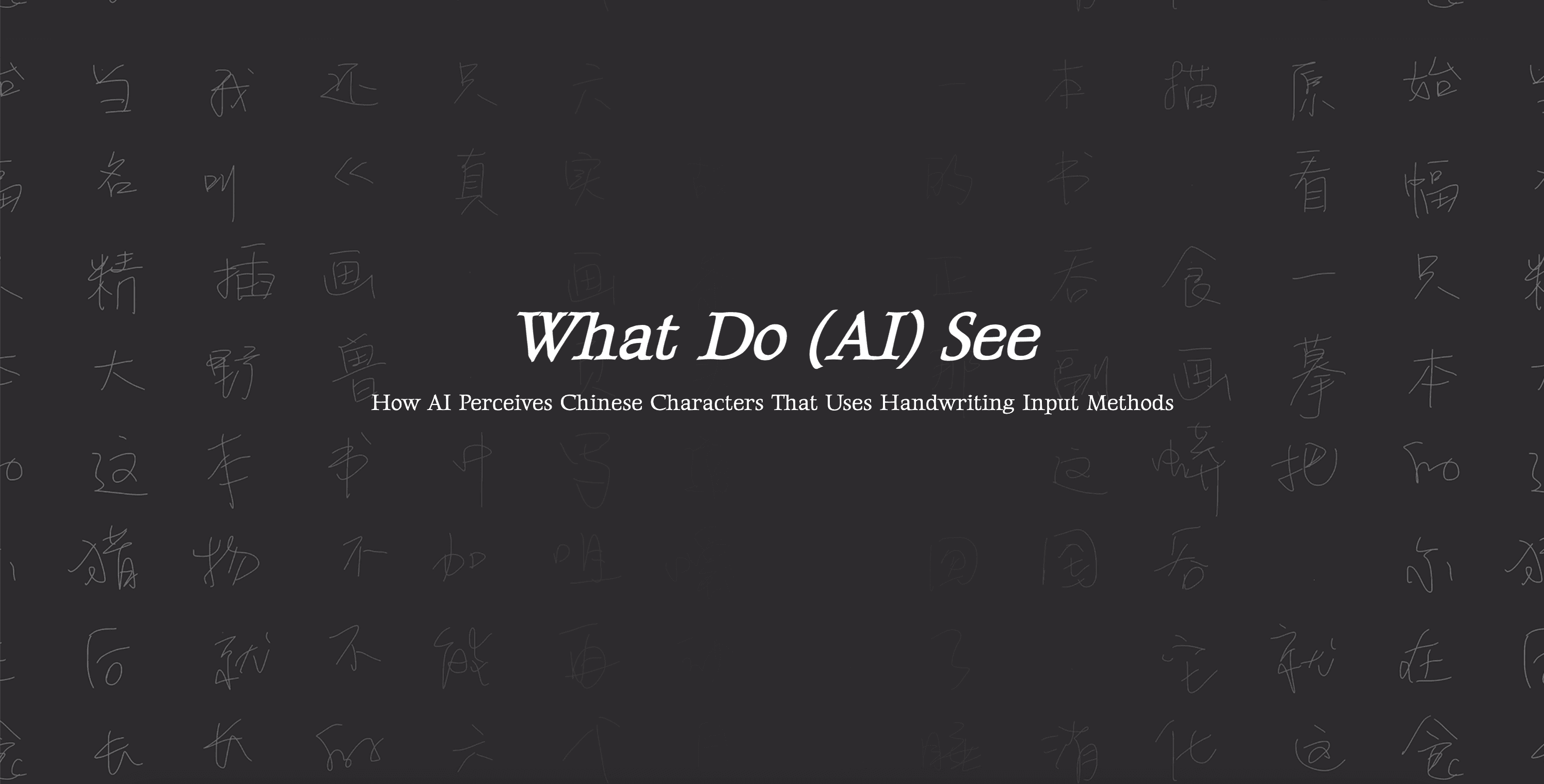
What Do (AI) See
An interactive exploration of how AI interprets handwritten Chinese characters.
Role:
Concept, Research, Creative Coding, Web Development, Publication & Exhibition Design
Type:
Interactive Web, Participatory Installation, Research
Tools:
Python, HTML, CSS, JavaScript
Year:
2022
What Do (AI) See
An interactive exploration of how AI interprets handwritten Chinese characters.
Role:
Concept, Research, Creative Coding, Web Development, Publication & Exhibition Design
Type:
Interactive Web, Participatory Installation, Research
Tools:
Python, HTML, CSS, JavaScript
Year:
2022
What Do (AI) See
An interactive exploration of how AI interprets handwritten Chinese characters.
Role:
Concept, Research, Creative Coding, Web Development, Publication & Exhibition Design
Type:
Interactive Web, Participatory Installation, Research
Tools:
Python, HTML, CSS, JavaScript
Year:
2022
Overview
Overview
Overview
With Pinyin input widely used in everyday communication, many Chinese speakers experience character amnesia (提笔忘字): recognizing familiar characters but struggling to remember how to write them by hand. Handwriting input offers another way to interact with the language, one stroke at a time.
As a character is written on a phone, the recognition system continuously predicts what it might be. I became fascinated by the fleeting moments when incomplete strokes were interpreted as entirely different characters.
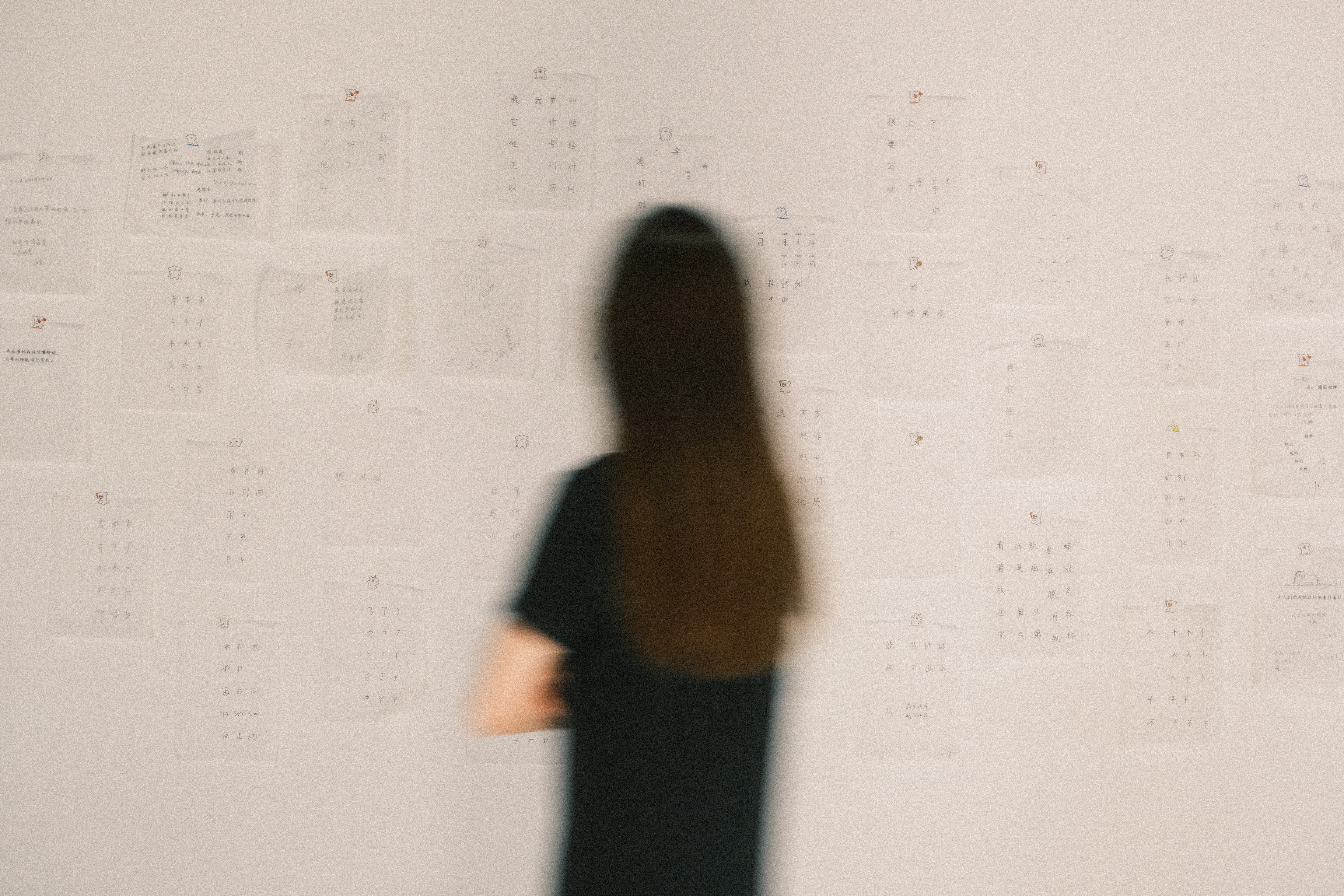
What Do (AI) See documents these shifting predictions and collects them as alternative visual forms of existing Chinese characters. The collection became the foundation of both an interactive website and a participatory exhibition, inviting visitors to explore, reinterpret, and even practice writing the characters as seen by AI.
“What makes handwritten strokes a language, and how is it that artificial intelligence sees and understands Chinese calligraphy?”
Capturing the Recognition Process
Capturing the Recognition Process
Capturing the Recognition Process
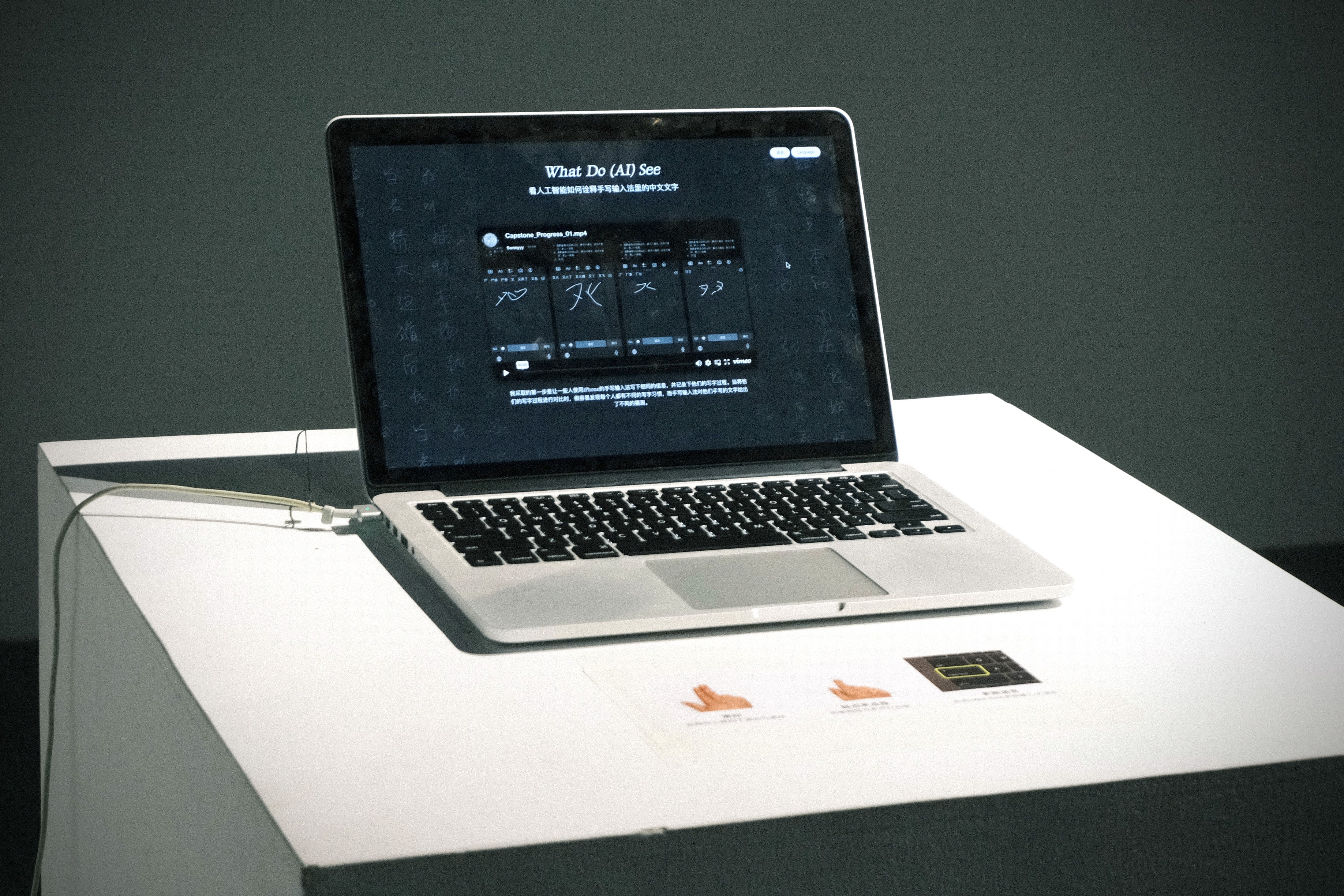
I recorded people writing Chinese using a phone's handwriting input method, observing how the system's predictions changed with each stroke. Some guesses were unexpected but visually plausible, revealing surprising similarities between incomplete strokes and existing characters.
I extracted these moments from the recordings, pairing handwritten forms with the characters recognized by the system. Rather than treating them as errors, I saw them as alternative ways of interpreting Chinese writing.
Building the Character Database
Building the Character Database
Building the Character Database
I used Python to process and organize the captured images, grouping handwritten forms by the characters recognized by the system.
Using JSON, I organized multiple visual variations of each character into a structured database. This transformed individual moments of recognition into a collection of alternative character forms that could be retrieved and displayed through the website.


Designing the Interactive Website
Designing the Interactive Website
Designing the Interactive Website
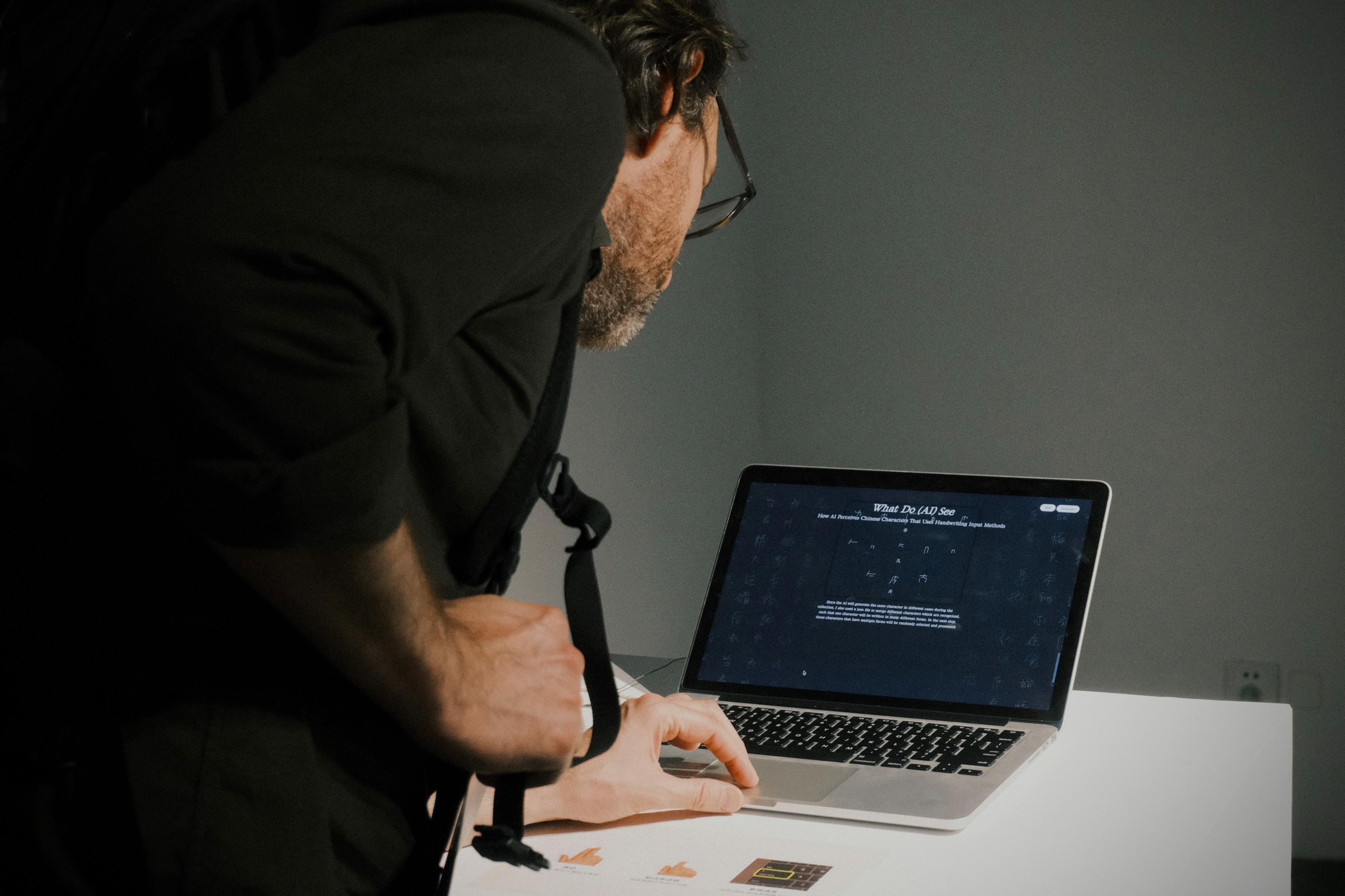
I designed and developed a simple, documentation-inspired website that allows visitors to explore the collected characters.
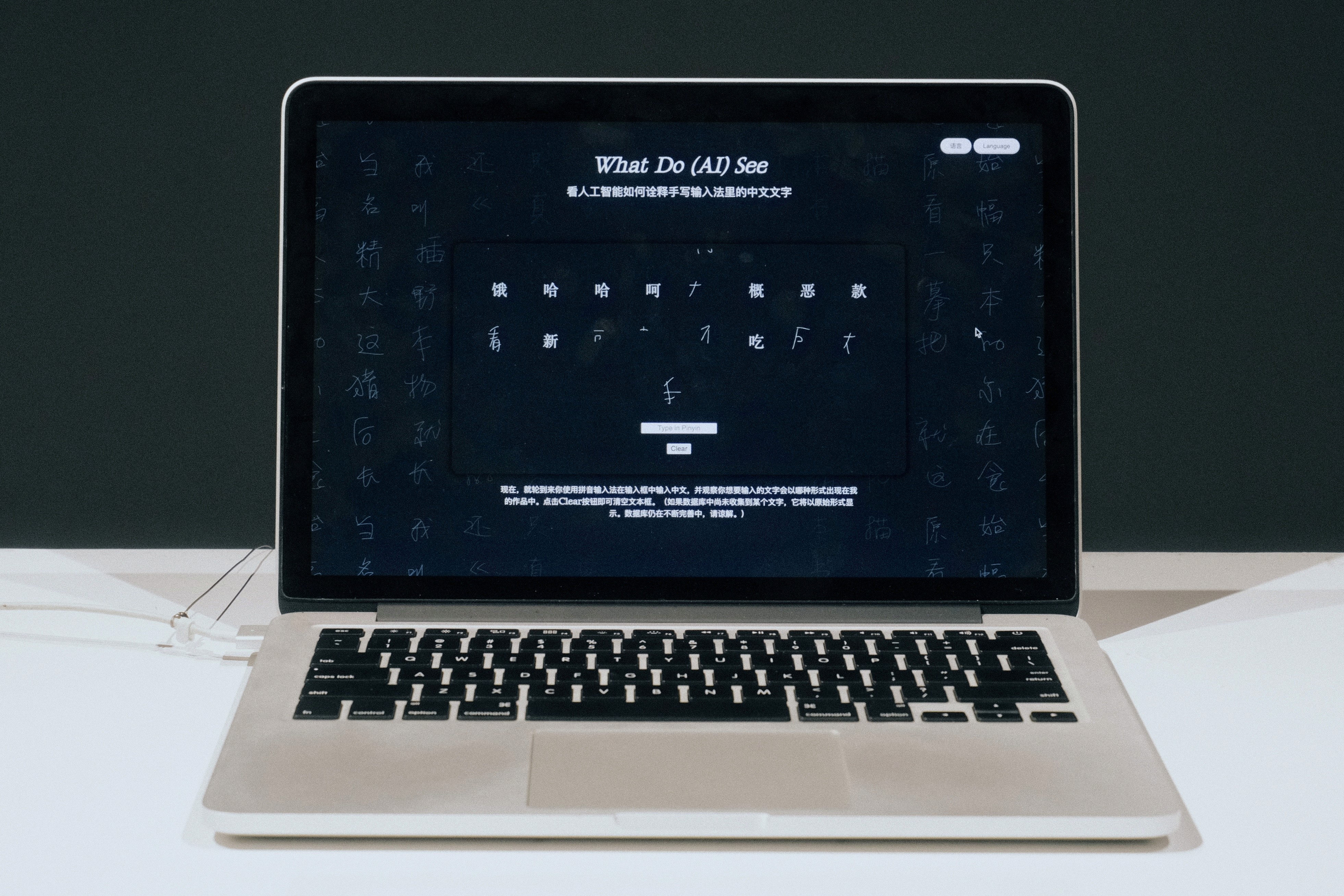
Visitors can type Chinese using Pinyin input, and the website displays a randomly selected alternative form from the database. Characters without collected variations remain unchanged.
The experience invites visitors to see familiar Chinese characters through the unexpected interpretations of machine recognition.

Exhibition & Participation
Exhibition & Participation
Exhibition & Participation
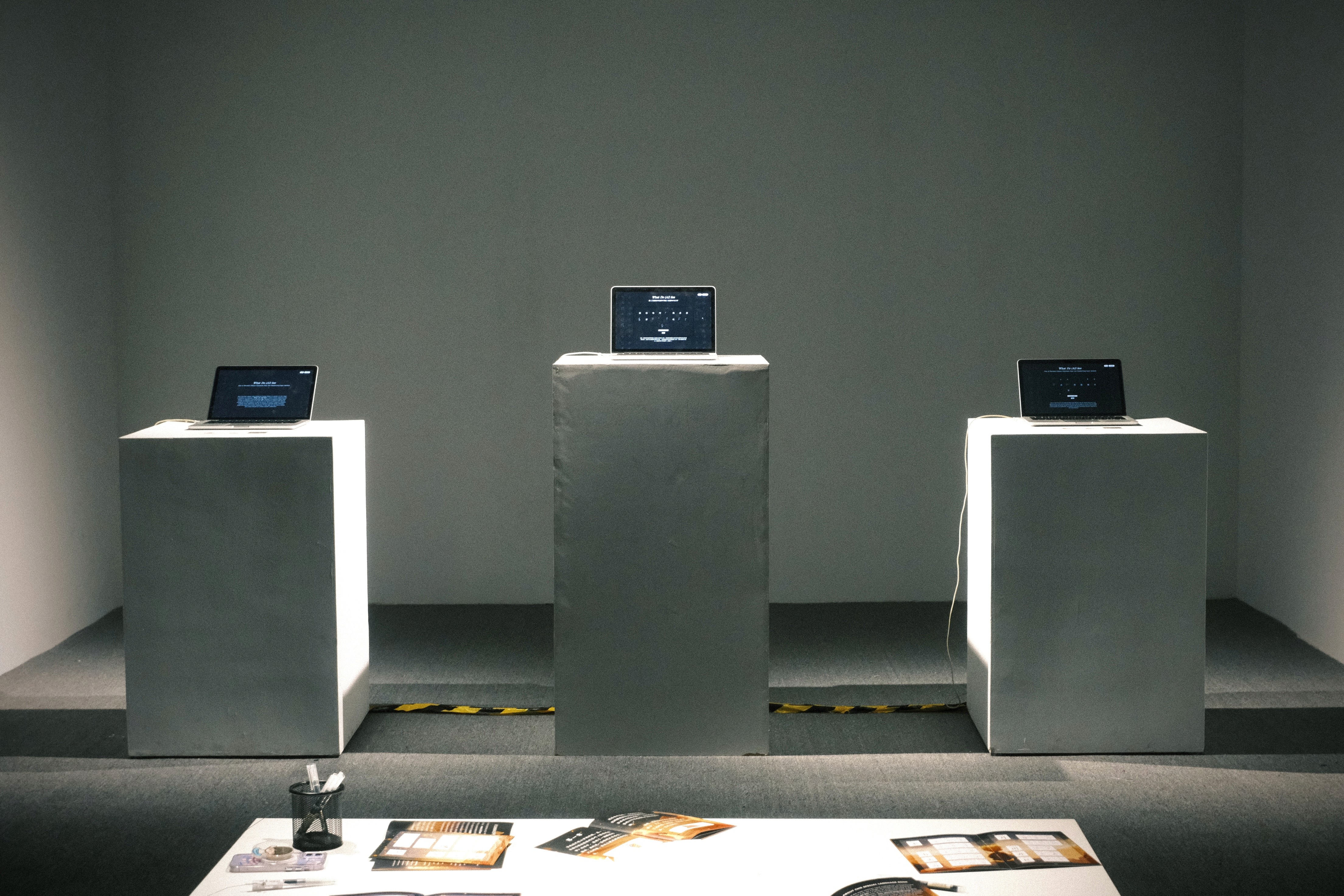
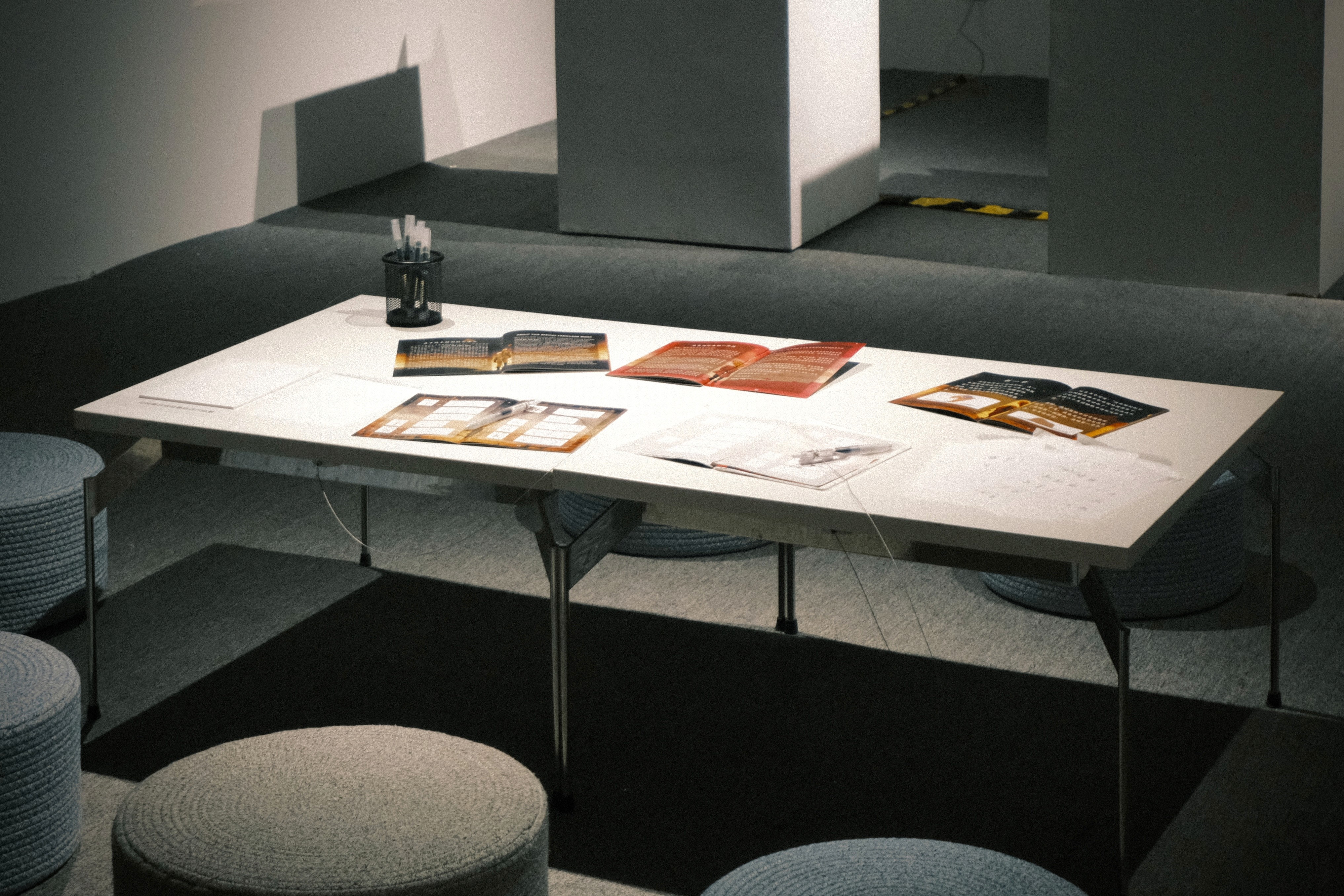
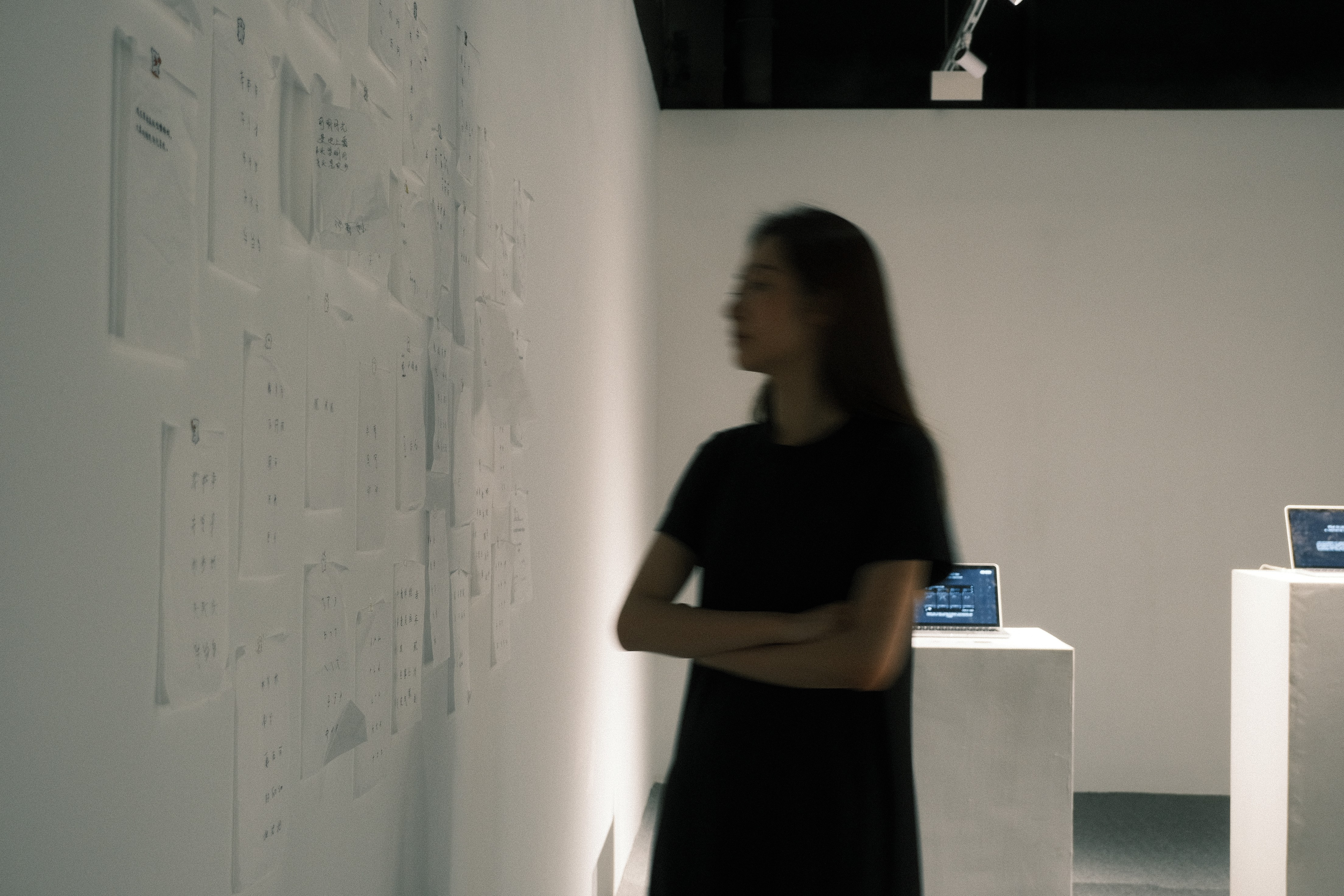
To bring the project beyond the screen, I presented What Do (AI) See as a participatory exhibition.
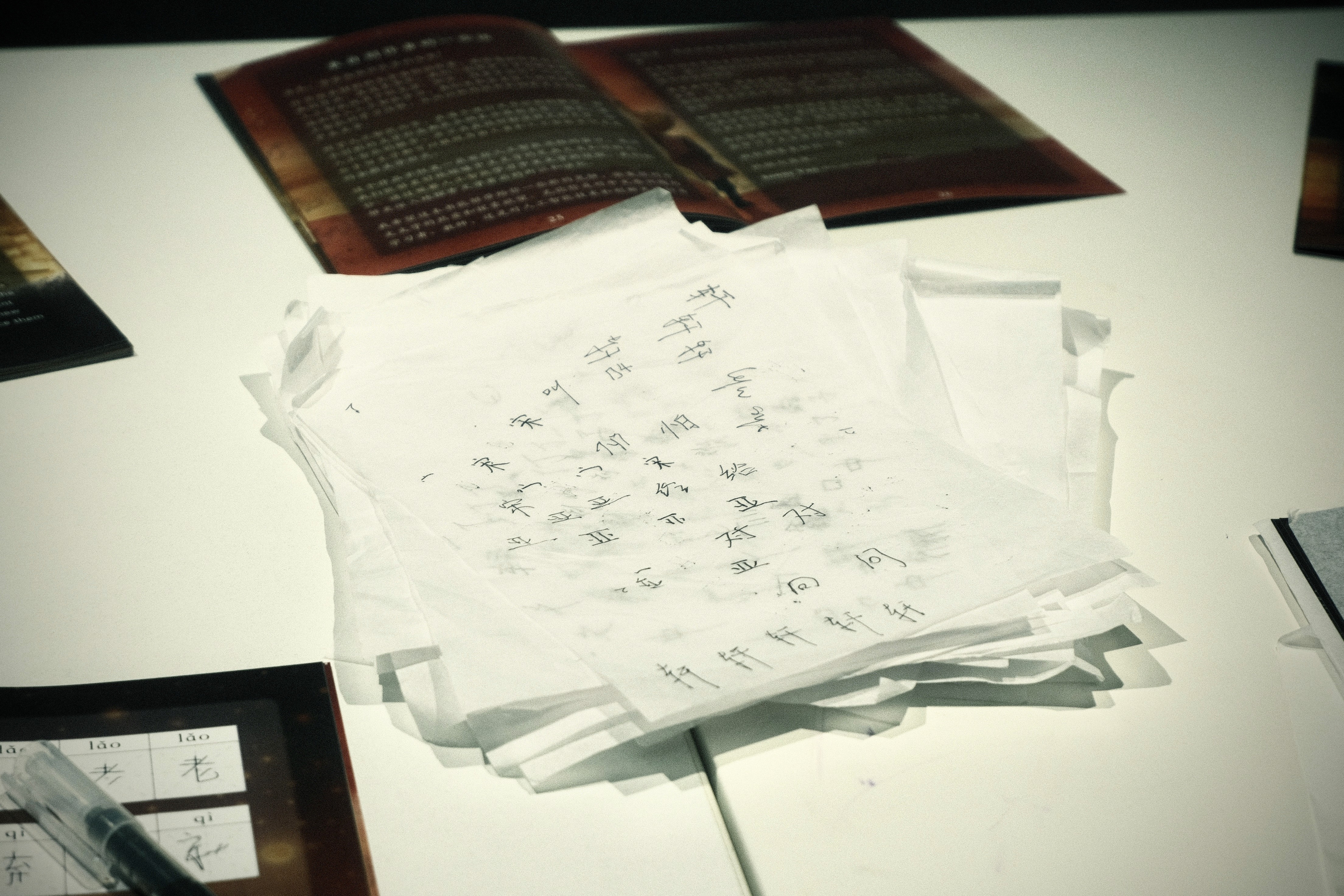
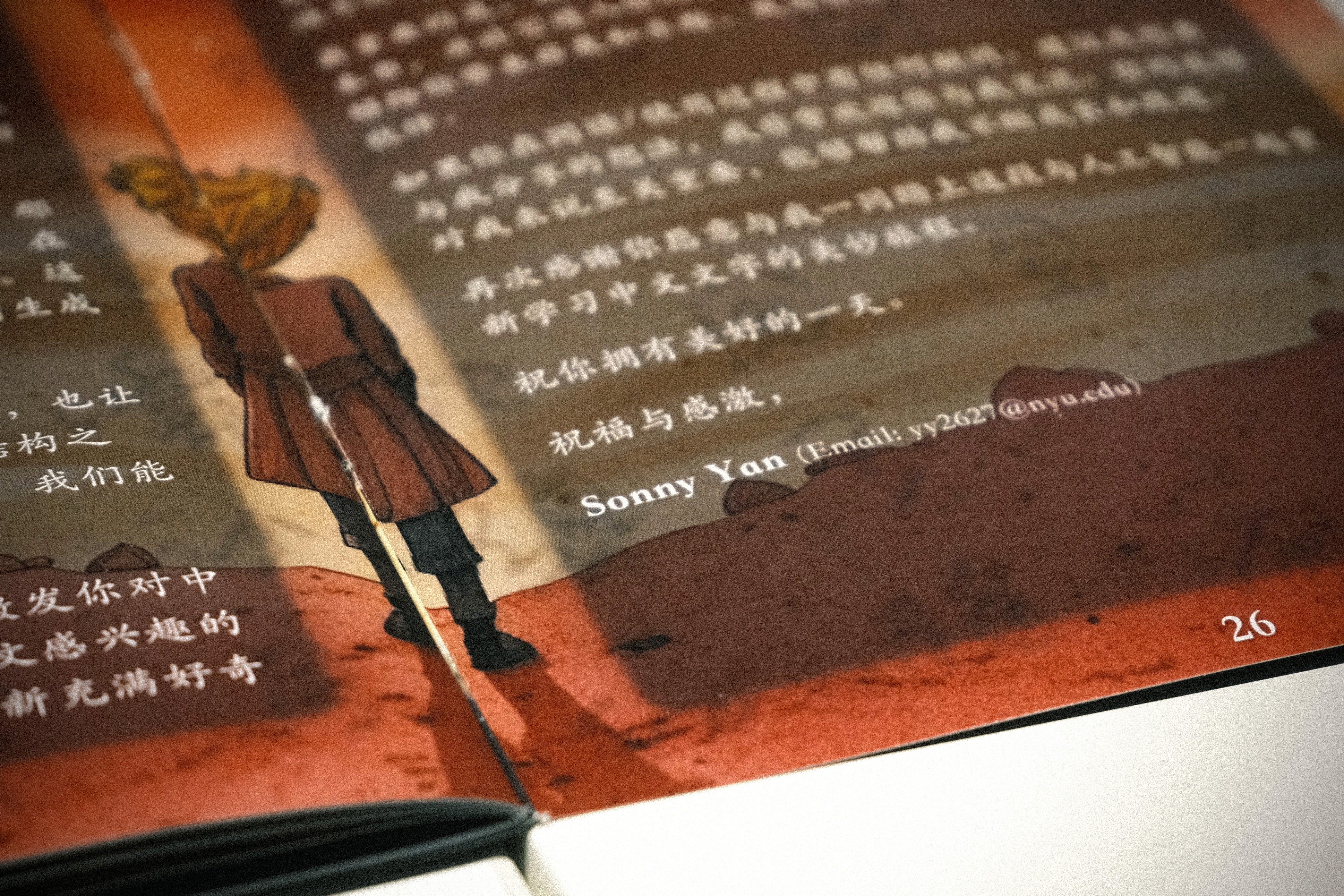
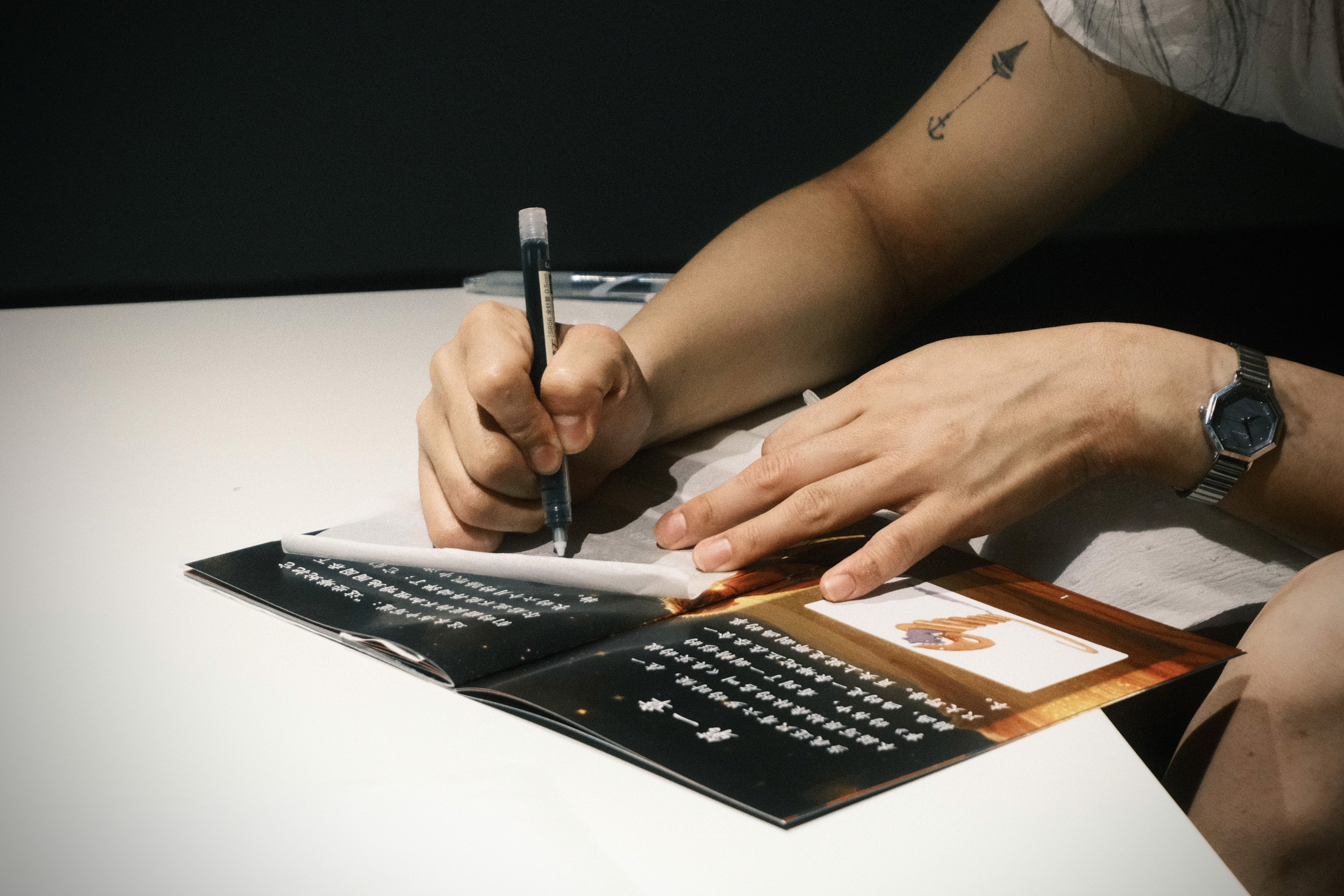
I designed a character tracing booklet featuring the unusual forms collected from the handwriting recognition system. Visitors were invited to trace these characters, as if learning an unfamiliar writing system. The experience reversed the original relationship between humans and AI: instead of machines learning to recognize human handwriting, people were now learning to write the characters as machines had interpreted them.
Three computers displayed the interactive website, allowing visitors to explore the recognition process and discover how these alternative character forms were created.
See the live site: https://sonnyyy77.github.io/WhatDoAISee/intro/
See the live site: https://sonnyyy77.github.io/WhatDoAISee/intro/
See the live site: https://sonnyyy77.github.io/WhatDoAISee/intro/
MORE WORKS
MORE WORKS