Tiny Fox Theater
Tiny Fox Theater
Tiny Fox Theater
Project Type: Creative Experiment
Project Type: Creative Experiment
Project Type: Creative Experiment
Time: Oct 2025
Time: Oct 2025
Time: Oct 2025
A generative AI short film imagining a miniature theater hidden behind a tiny red door.
A generative AI short film imagining a miniature theater hidden behind a tiny red door.
A generative AI short film imagining a miniature theater hidden behind a tiny red door.
Tiny Doors Atlanta has become a beloved part of the city. They're small and playful installations scattered across neighborhoods that invite curiosity and imagination.
This experiment asks a simple question:
What if those tiny doors were not just art objects, but actual entrances to worlds where aliens quietly live among us?
Using the Tiny Door at the Fox Theater as a starting point, I created a short speculative narrative that reimagines the location from an alien point of view. The result is a miniature cinematic experience that blends local culture, science-fiction, and visual storytelling.
Rather than a final product, this project functions as a creative sandbox that explores how generative media can be used to tell playful and site-specific stories.
Tiny Doors Atlanta has become a beloved part of the city. They're small and playful installations scattered across neighborhoods that invite curiosity and imagination.
This experiment asks a simple question:
What if those tiny doors were not just art objects, but actual entrances to worlds where aliens quietly live among us?
Using the Tiny Door at the Fox Theater as a starting point, I created a short speculative narrative that reimagines the location from an alien point of view. The result is a miniature cinematic experience that blends local culture, science-fiction, and visual storytelling.
Rather than a final product, this project functions as a creative sandbox that explores how generative media can be used to tell playful and site-specific stories.
Tiny Doors Atlanta has become a beloved part of the city. They're small and playful installations scattered across neighborhoods that invite curiosity and imagination.
This experiment asks a simple question:
What if those tiny doors were not just art objects, but actual entrances to worlds where aliens quietly live among us?
Using the Tiny Door at the Fox Theater as a starting point, I created a short speculative narrative that reimagines the location from an alien point of view. The result is a miniature cinematic experience that blends local culture, science-fiction, and visual storytelling.
Rather than a final product, this project functions as a creative sandbox that explores how generative media can be used to tell playful and site-specific stories.
Context
Context
Context
Atlanta is full of landmarks, history, and small details that often go unnoticed. Among them, Tiny Doors have become unique sightseeing moments that transform ordinary walls into tiny sources of wonder. This project builds on that playful spirit and curiosity.
Instead of seeing Tiny Doors only as decorations, I imagined them as real portals where curious alien visitors have quietly settled inside the architecture of the city. The Tiny Door at the Fox Theater felt like the perfect location to explore this idea, since the theater is already rich with atmosphere, drama, and a sense of mystery.
Atlanta is full of landmarks, history, and small details that often go unnoticed. Among them, Tiny Doors have become unique sightseeing moments that transform ordinary walls into tiny sources of wonder. This project builds on that playful spirit and curiosity.
Instead of seeing Tiny Doors only as decorations, I imagined them as real portals where curious alien visitors have quietly settled inside the architecture of the city. The Tiny Door at the Fox Theater felt like the perfect location to explore this idea, since the theater is already rich with atmosphere, drama, and a sense of mystery.
Atlanta is full of landmarks, history, and small details that often go unnoticed. Among them, Tiny Doors have become unique sightseeing moments that transform ordinary walls into tiny sources of wonder. This project builds on that playful spirit and curiosity.
Instead of seeing Tiny Doors only as decorations, I imagined them as real portals where curious alien visitors have quietly settled inside the architecture of the city. The Tiny Door at the Fox Theater felt like the perfect location to explore this idea, since the theater is already rich with atmosphere, drama, and a sense of mystery.
Concept Building
Concept Building
Concept Building
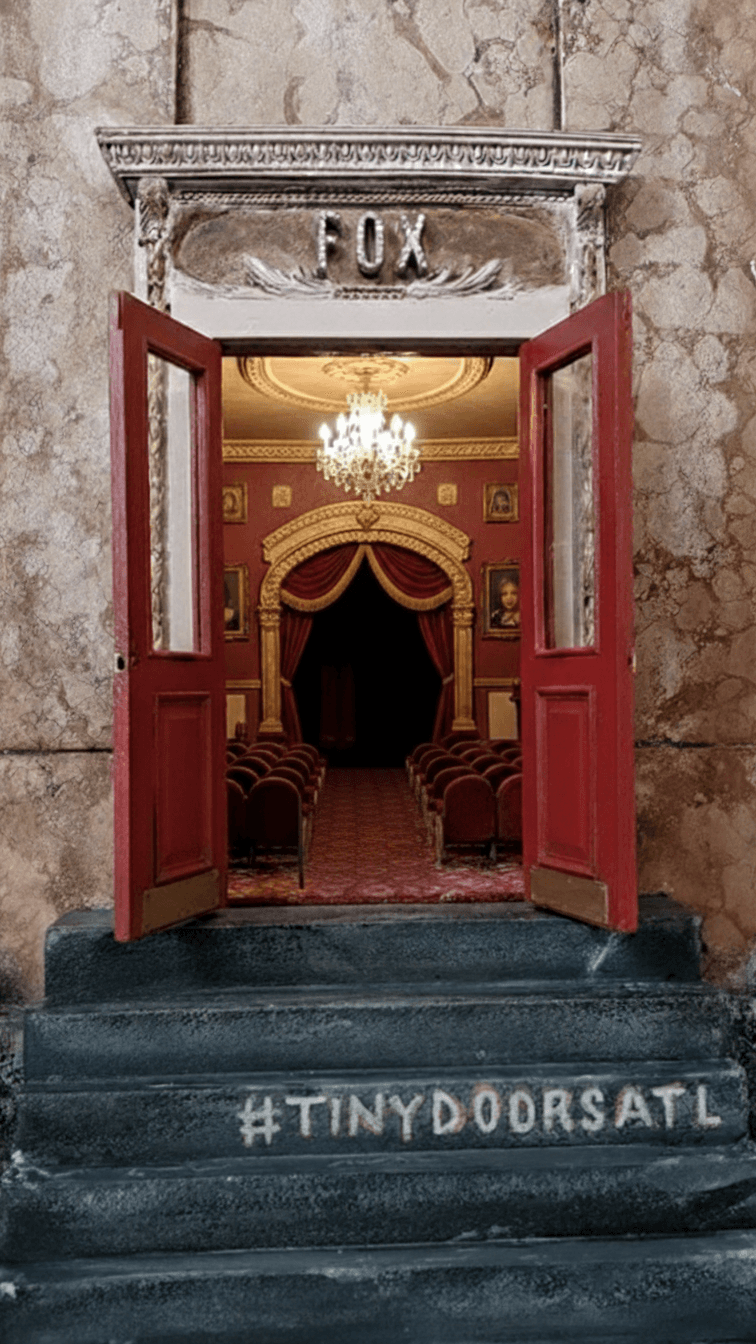
The project began with a simple idea inspired by the Tiny Doors installation at the Fox Theater. It imagines a whimsical cinematic journey into a secret world hidden in plain sight, where a magical miniature theater lives just behind a tiny red door at the base of a real building.
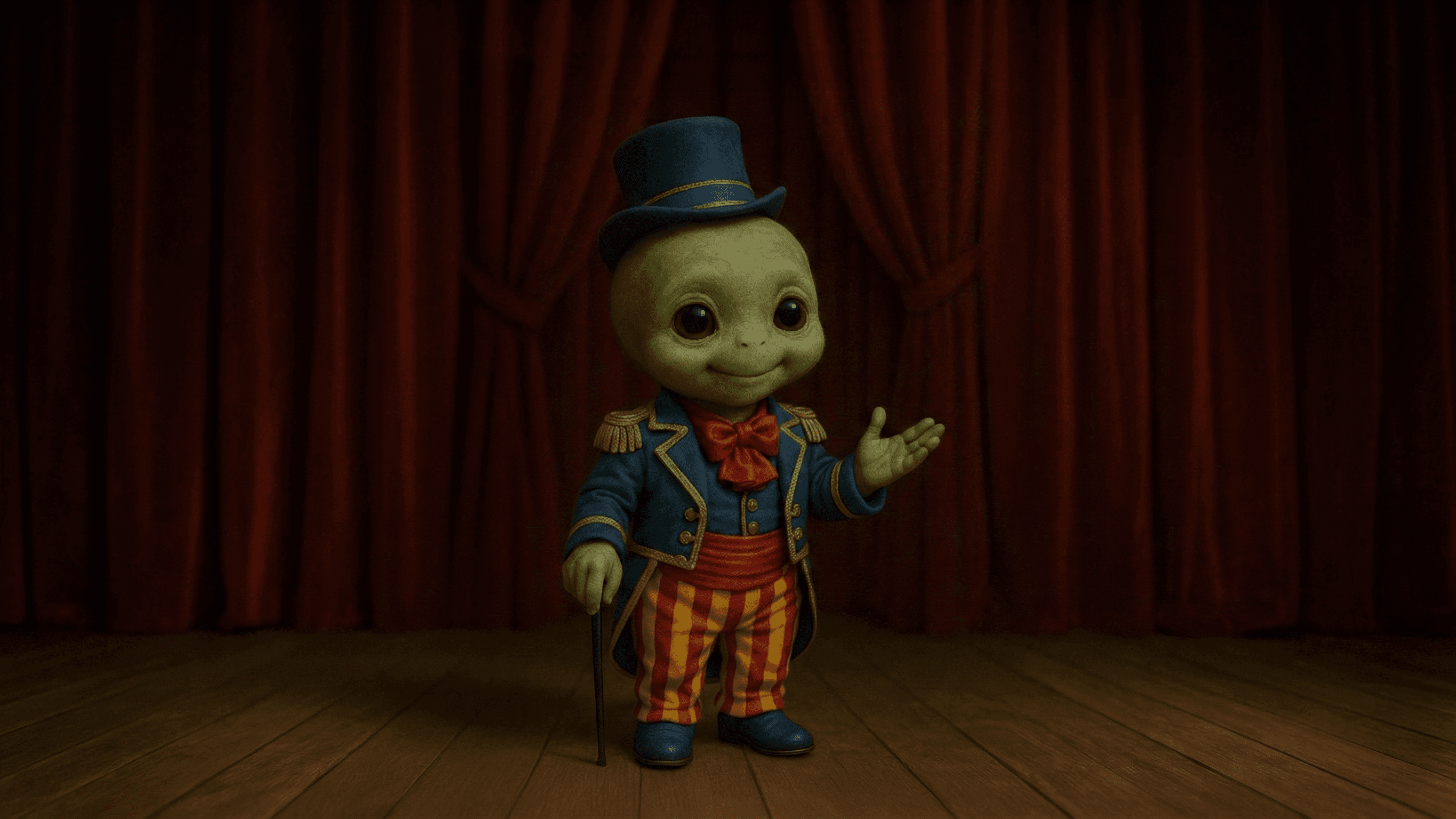
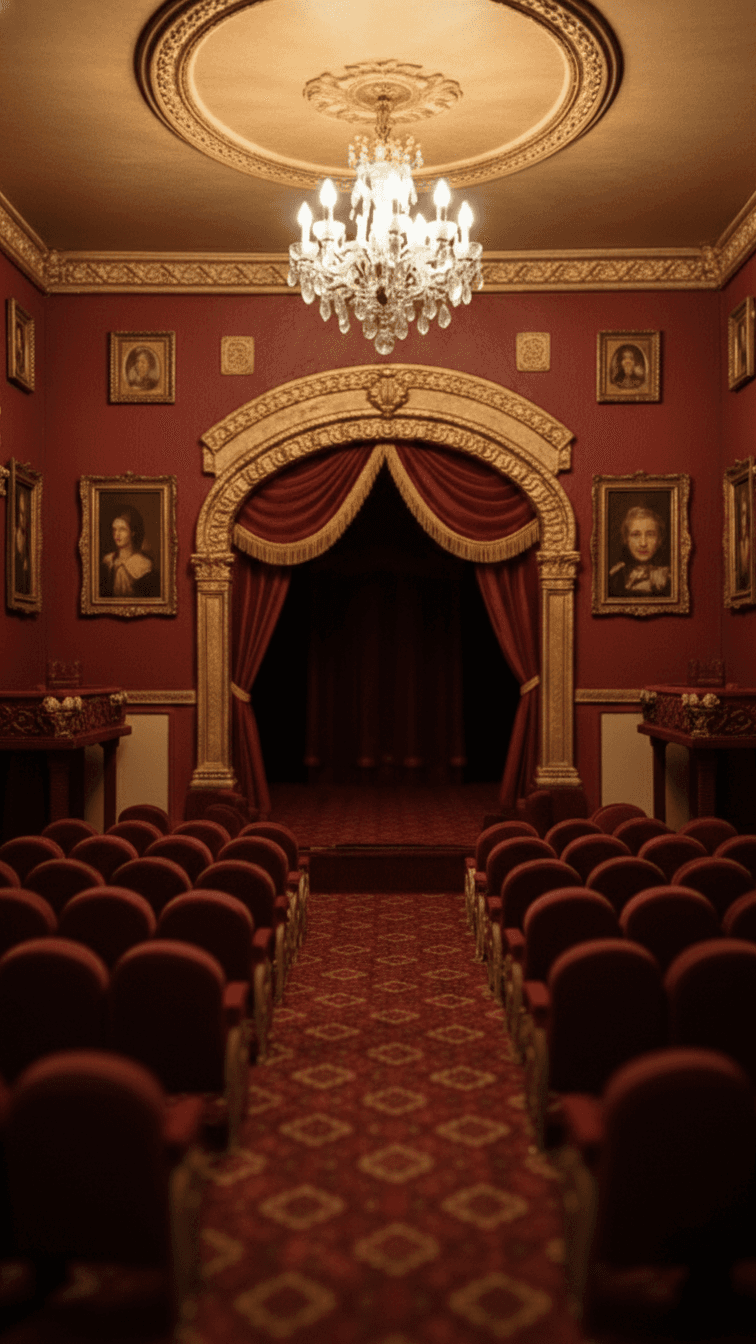
When the camera discovers the door, it opens to reveal a fully realized enchanting space. Chandeliers glow, velvet curtains hang, and a charming little alien ringmaster welcomes us into his world of craft, performance, and imagination. This imagined scenario became the starting point for all further visual exploration.
The project began with a simple idea inspired by the Tiny Doors installation at the Fox Theater. It imagines a whimsical cinematic journey into a secret world hidden in plain sight, where a magical miniature theater lives just behind a tiny red door at the base of a real building.
When the camera discovers the door, it opens to reveal a fully realized enchanting space. Chandeliers glow, velvet curtains hang, and a charming little alien ringmaster welcomes us into his world of craft, performance, and imagination. This imagined scenario became the starting point for all further visual exploration.
The project began with a simple idea inspired by the Tiny Doors installation at the Fox Theater. It imagines a whimsical cinematic journey into a secret world hidden in plain sight, where a magical miniature theater lives just behind a tiny red door at the base of a real building.
When the camera discovers the door, it opens to reveal a fully realized enchanting space. Chandeliers glow, velvet curtains hang, and a charming little alien ringmaster welcomes us into his world of craft, performance, and imagination. This imagined scenario became the starting point for all further visual exploration.
Story Arc
Story Arc
Story Arc
To shape the idea into a structured experience, the narrative was organized into five moments.
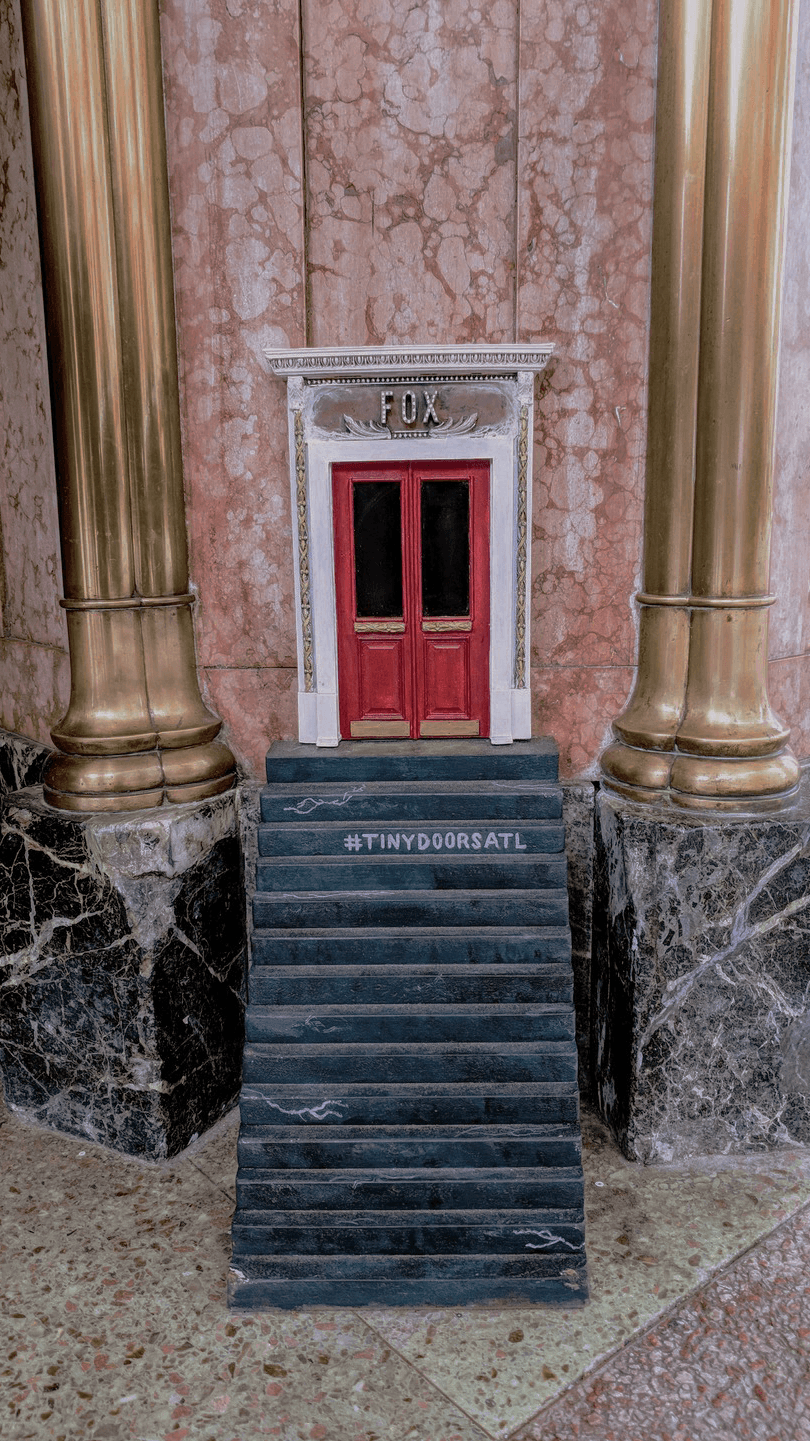
First is the discovery of the door, when the viewer notices the small red entrance marked FOX on the marble wall.
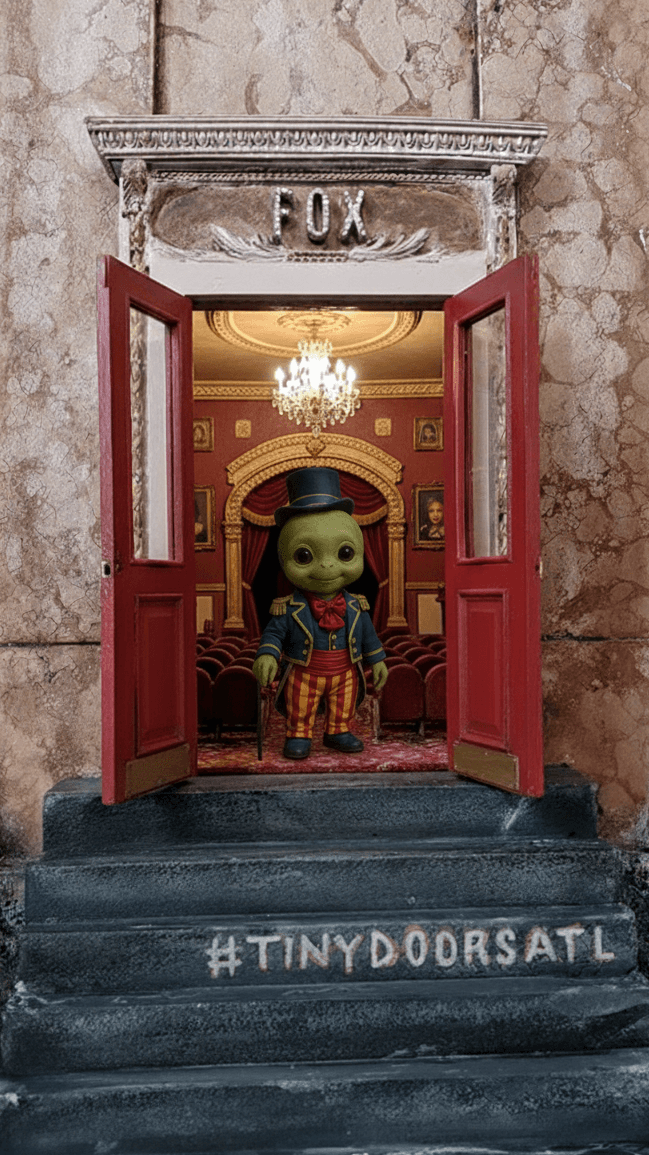
Second is the hidden world revealed, as the doors open to a warm golden glow and the alien greets the viewer.
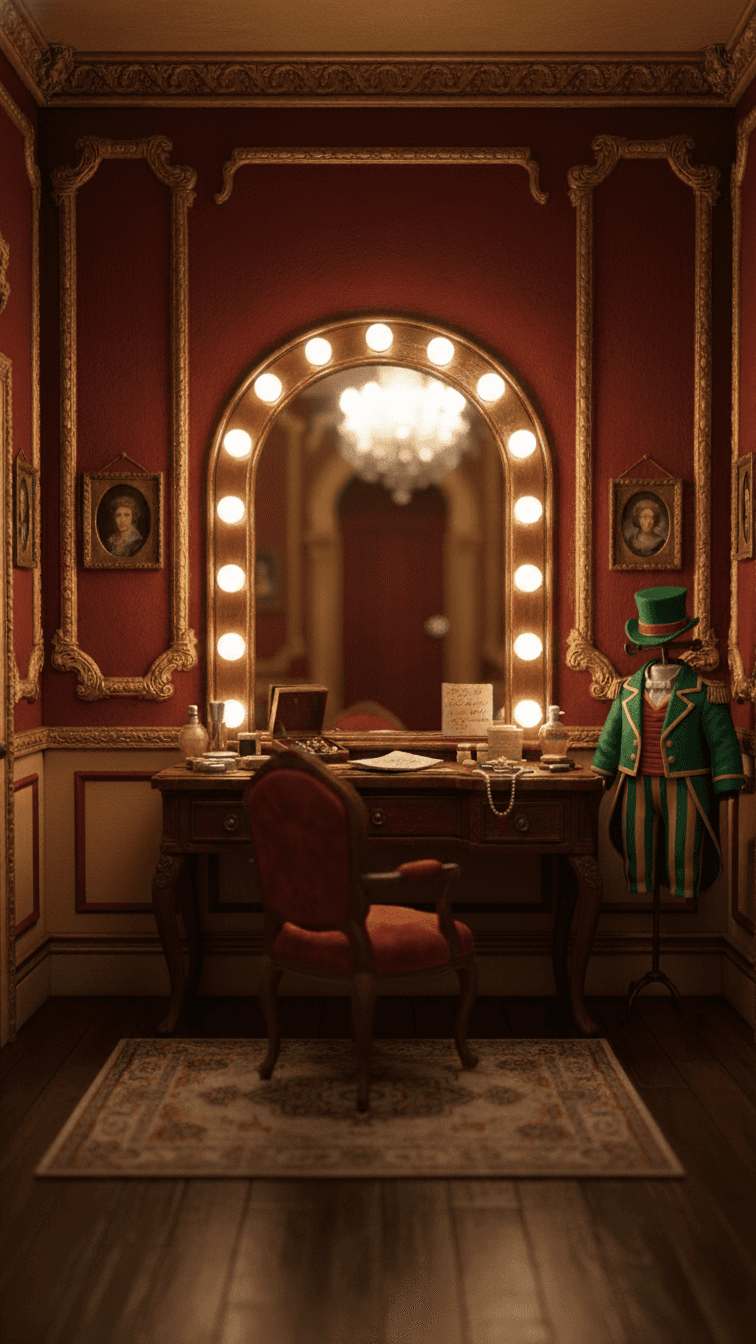
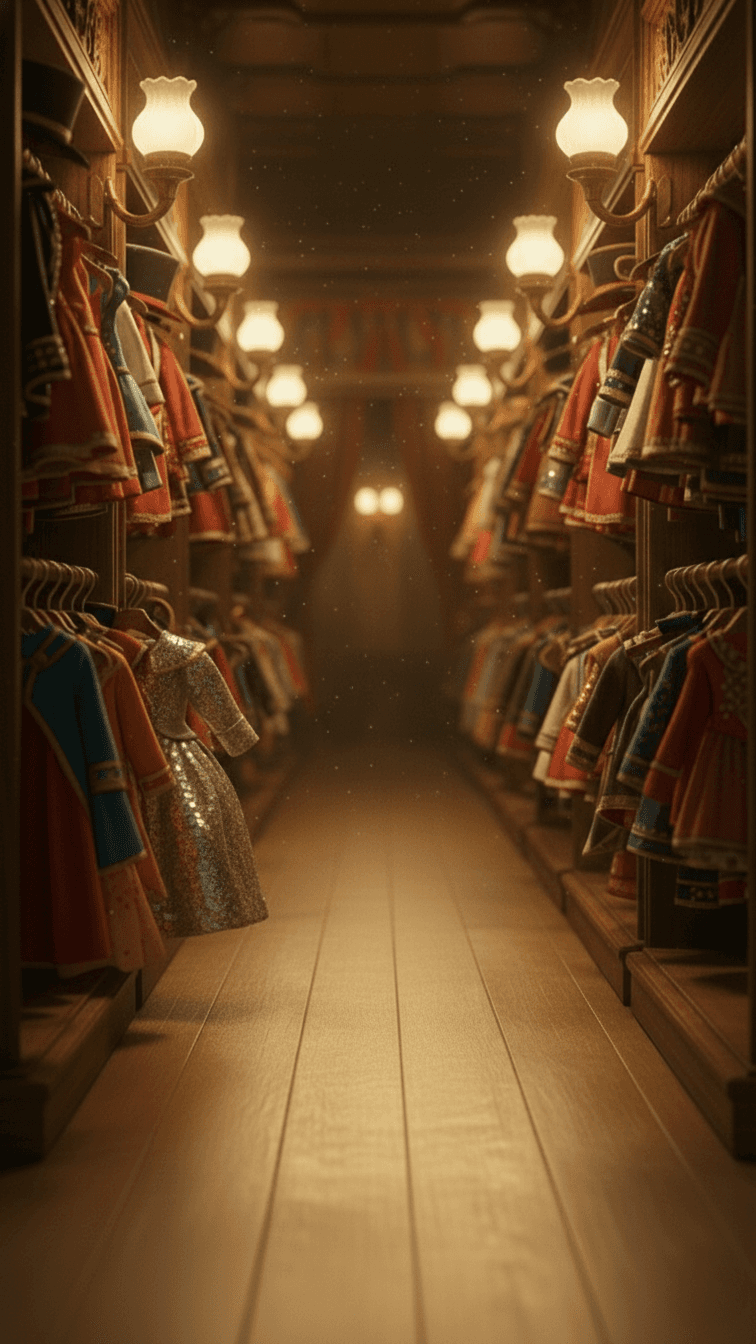
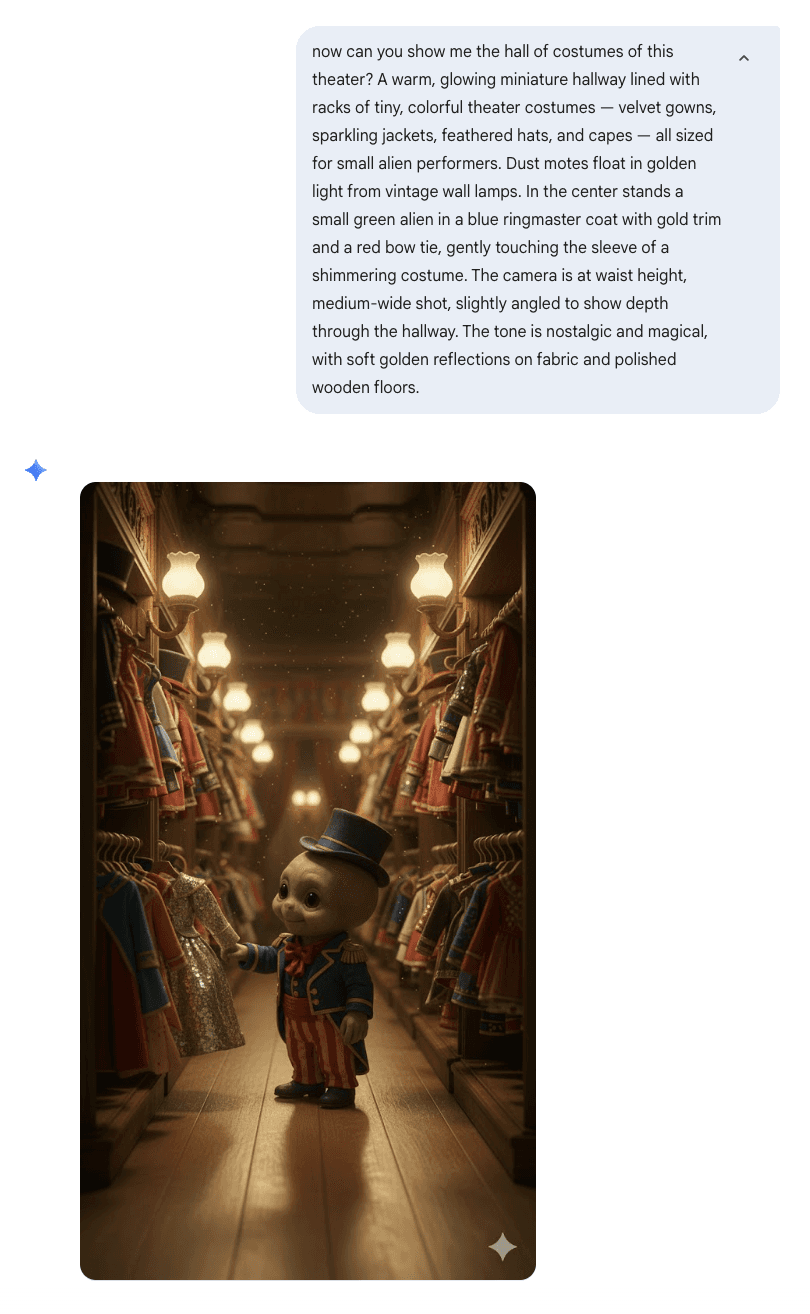
Third comes the guided tour of the theater, where the alien introduces spaces such as the Dressing Room, the Hall of Costumes, and the Prop Workshop.
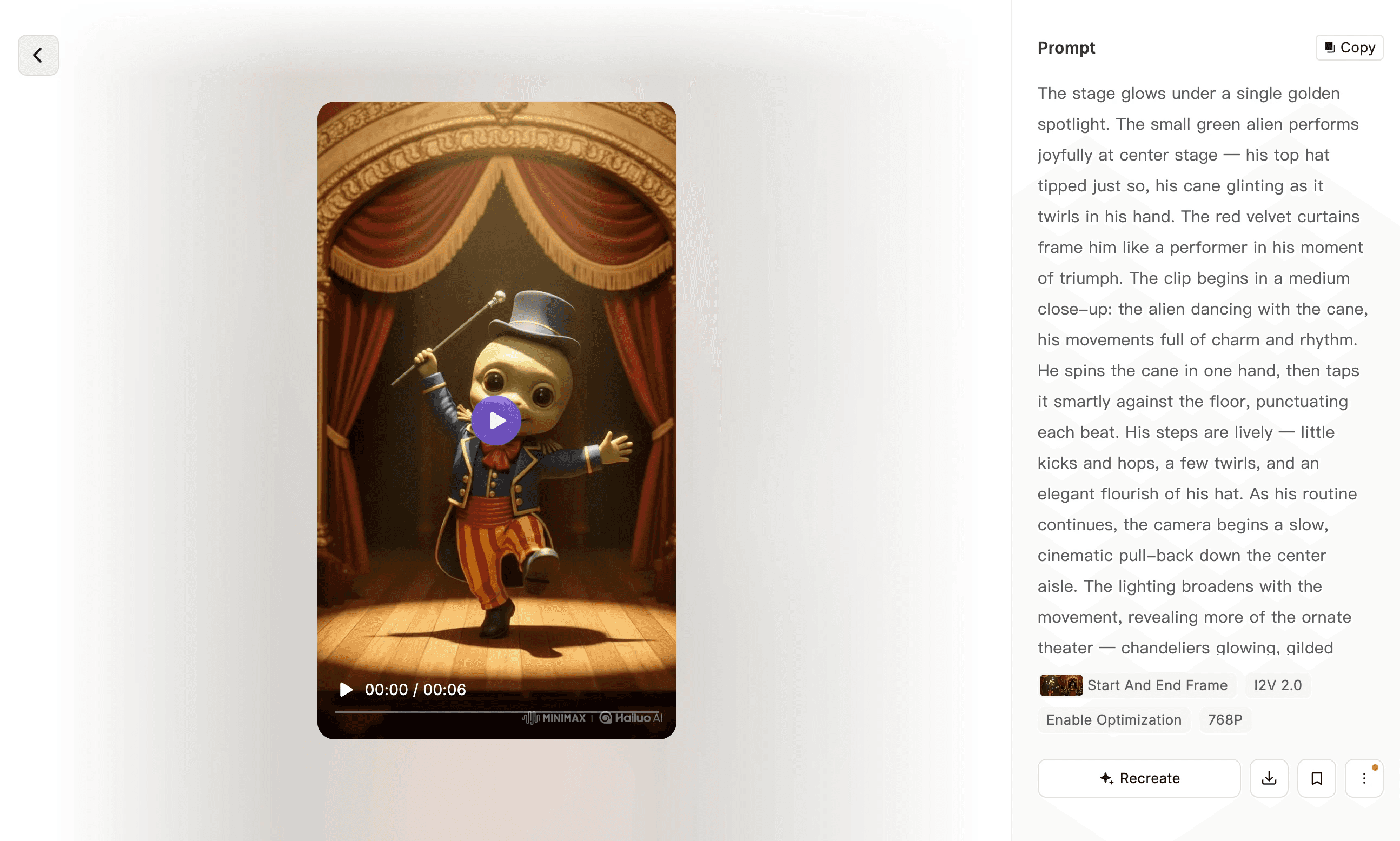
Fourth is the performance, when the alien steps onto the grand stage and dances under a single spotlight.
Finally, the story returns to reality as the camera retreats through the tiny doors and they close once more.
This arc guided the pacing and mood of the entire project.
To shape the idea into a structured experience, the narrative was organized into five moments.
First is the discovery of the door, when the viewer notices the small red entrance marked FOX on the marble wall.
Second is the hidden world revealed, as the doors open to a warm golden glow and the alien greets the viewer.
Third comes the guided tour of the theater, where the alien introduces spaces such as the Dressing Room, the Hall of Costumes, and the Prop Workshop.
Fourth is the performance, when the alien steps onto the grand stage and dances under a single spotlight.
Finally, the story returns to reality as the camera retreats through the tiny doors and they close once more.
This arc guided the pacing and mood of the entire project.
To shape the idea into a structured experience, the narrative was organized into five moments.
First is the discovery of the door, when the viewer notices the small red entrance marked FOX on the marble wall.
Second is the hidden world revealed, as the doors open to a warm golden glow and the alien greets the viewer.
Third comes the guided tour of the theater, where the alien introduces spaces such as the Dressing Room, the Hall of Costumes, and the Prop Workshop.
Fourth is the performance, when the alien steps onto the grand stage and dances under a single spotlight.
Finally, the story returns to reality as the camera retreats through the tiny doors and they close once more.
This arc guided the pacing and mood of the entire project.
Character Direction
Character Direction
Character Direction
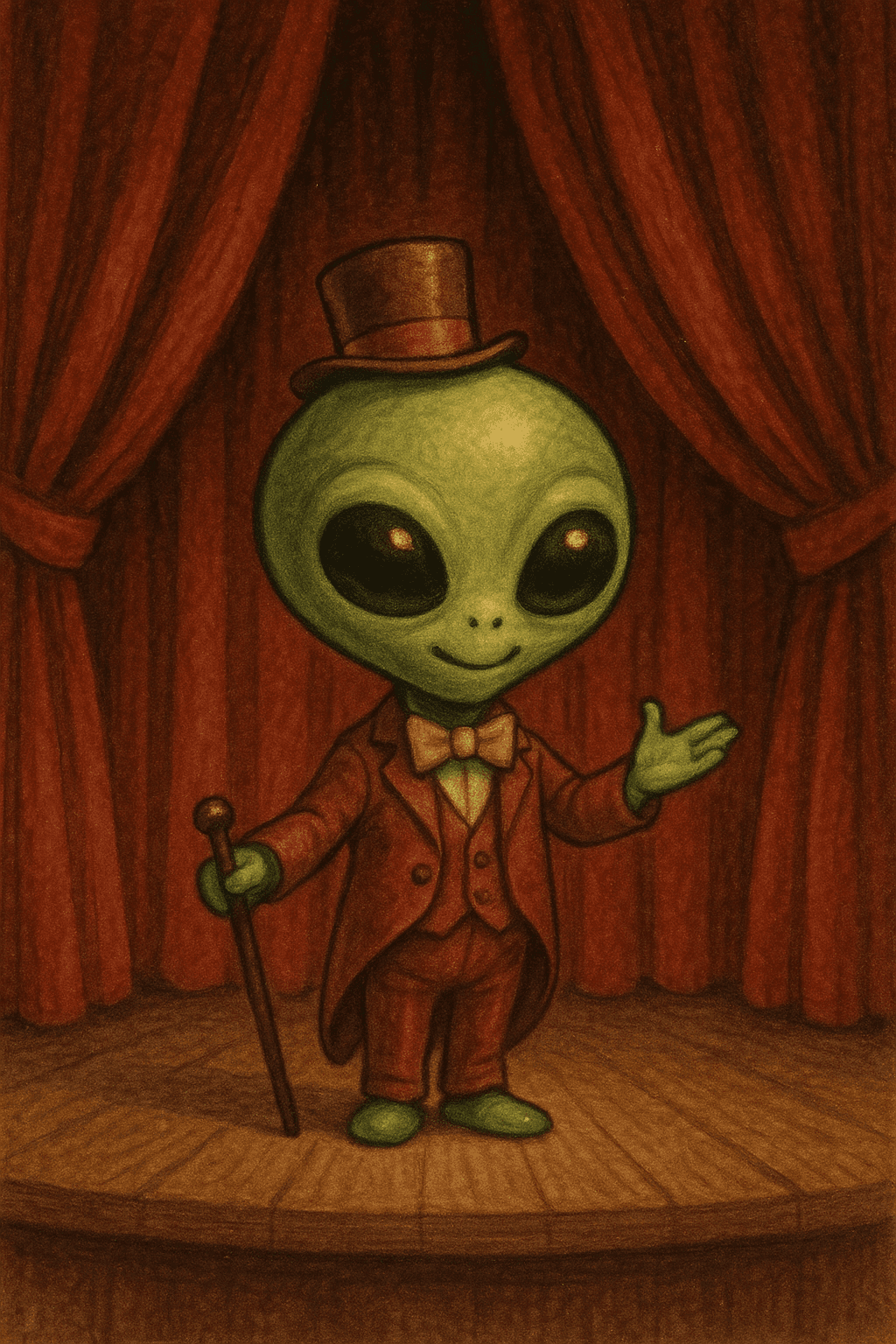
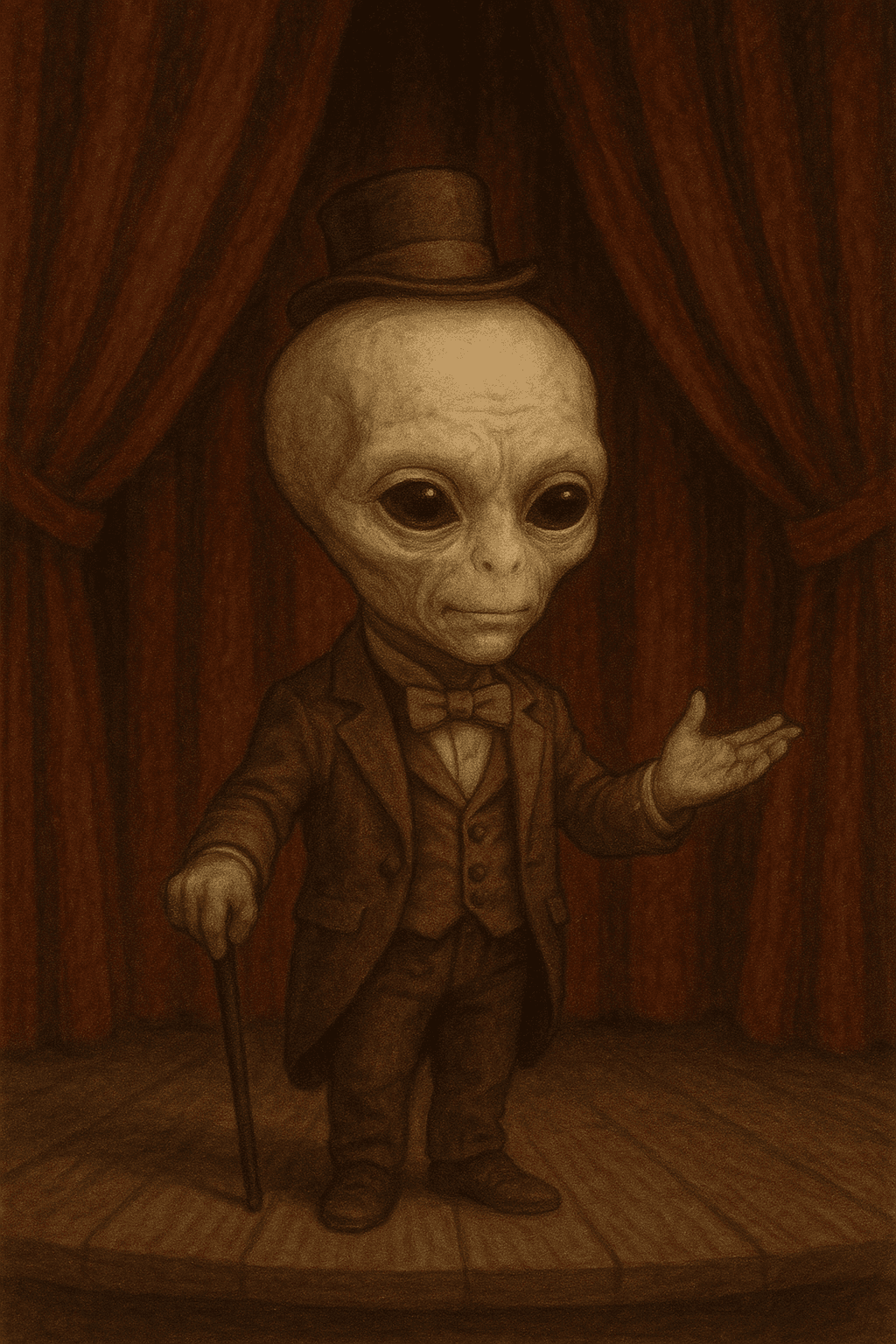
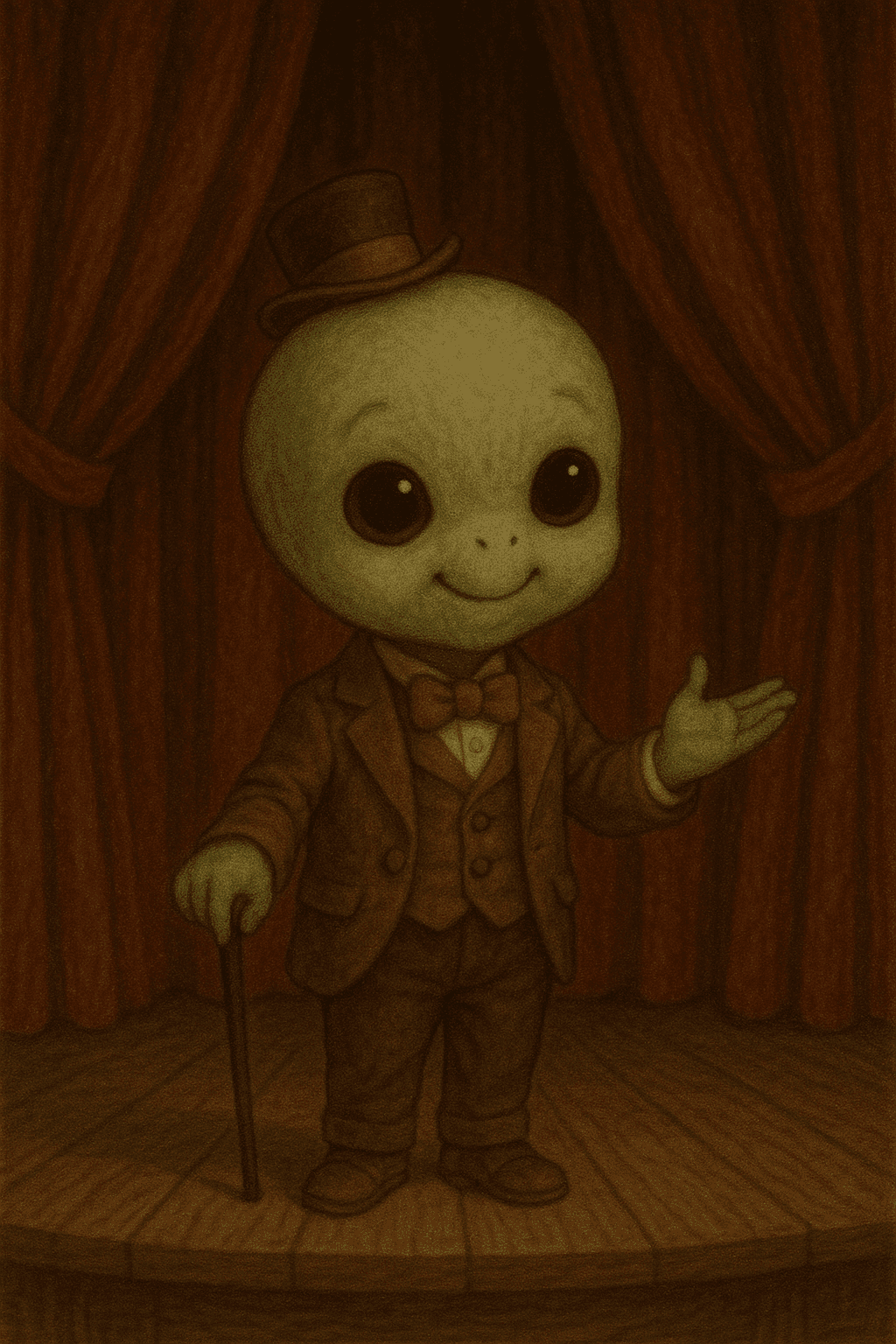
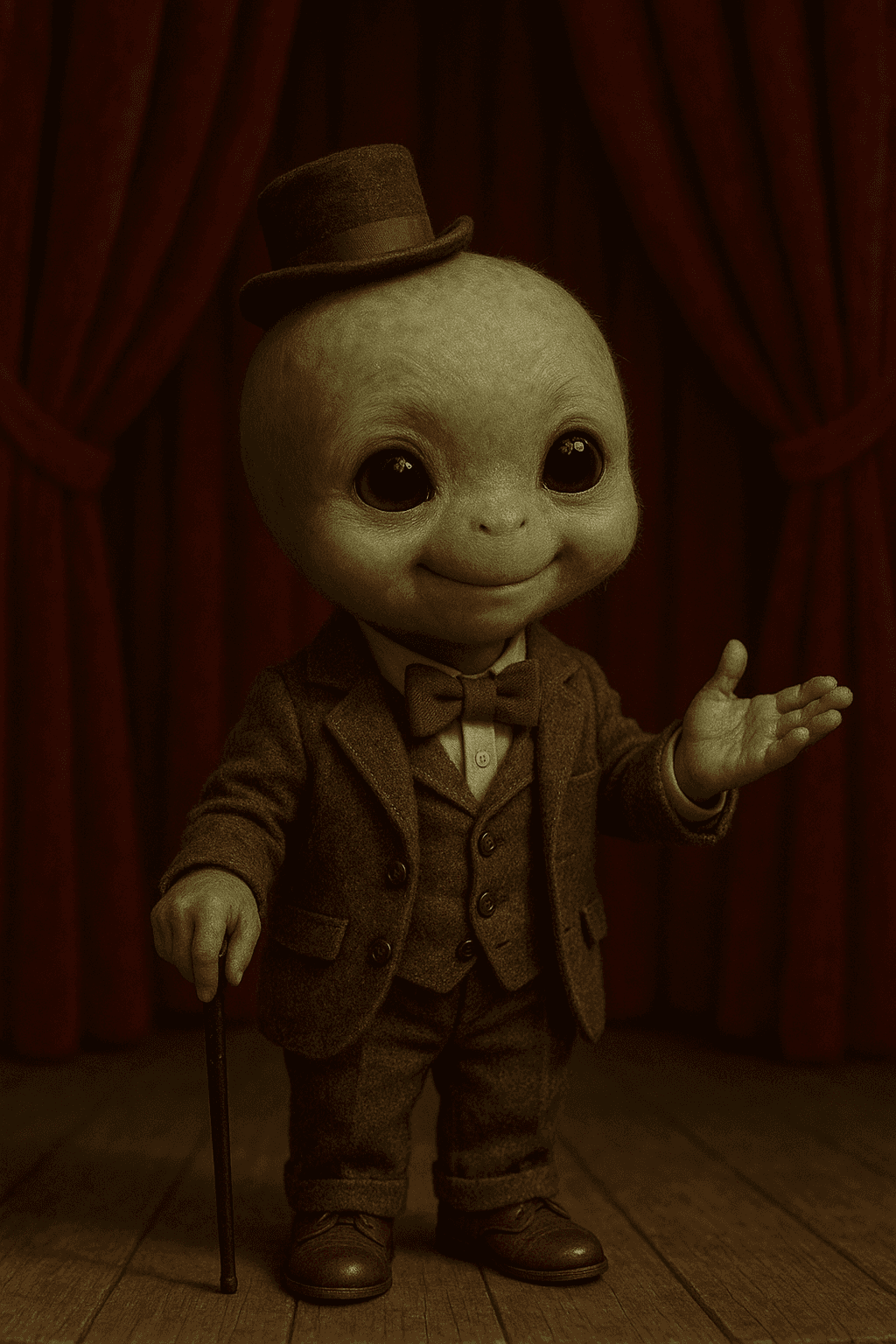
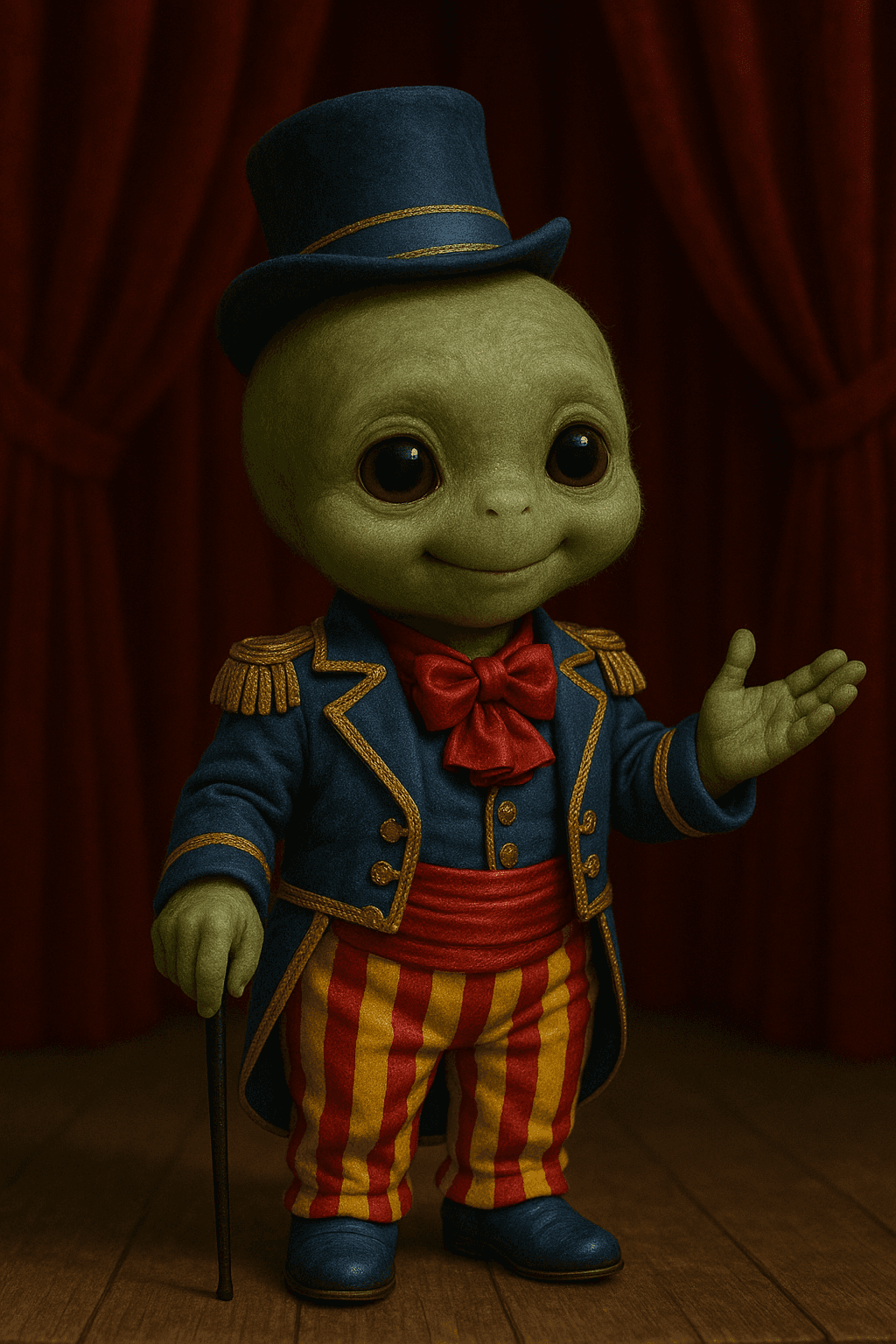
Defining the personality of the alien host was a central creative challenge. Early attempts explored many possibilities. The alien needed to be tiny and fit the vibe of theater. Some versions looked too creepy. Others needed to feel cuter or more realistic. The outfit was also refined to feel more like a costume from a musical performance.
Through this process of feedback and adjustment, the character gradually found the right balance. The final result became a friendly and expressive alien ringmaster who feels theatrical, imaginative, and inviting. This character shaped the emotional tone of the miniature world.
Defining the personality of the alien host was a central creative challenge. Early attempts explored many possibilities. The alien needed to be tiny and fit the vibe of theater. Some versions looked too creepy. Others needed to feel cuter or more realistic. The outfit was also refined to feel more like a costume from a musical performance.
Through this process of feedback and adjustment, the character gradually found the right balance. The final result became a friendly and expressive alien ringmaster who feels theatrical, imaginative, and inviting. This character shaped the emotional tone of the miniature world.
Defining the personality of the alien host was a central creative challenge. Early attempts explored many possibilities. The alien needed to be tiny and fit the vibe of theater. Some versions looked too creepy. Others needed to feel cuter or more realistic. The outfit was also refined to feel more like a costume from a musical performance.
Through this process of feedback and adjustment, the character gradually found the right balance. The final result became a friendly and expressive alien ringmaster who feels theatrical, imaginative, and inviting. This character shaped the emotional tone of the miniature world.
Storyborad
Storyborad
Storyborad
To imagine the concept as a cinematic experience, the project was mapped out as a storyboard sequence. Thinking in terms of scenes and shots helped transform loose ideas into a clearer narrative flow.
The sequence begins with a wide view of the Fox Theater and a zoom toward the tiny door. The door creaks open and the alien appears to welcome the viewer. The camera moves inside to explore the chamber, the dressing room, the hall of costumes, and the prop workshop. The story leads to the stage performance, and finally ends with the doors closing again.
This storyboard became the blueprint for both image and video development.
To imagine the concept as a cinematic experience, the project was mapped out as a storyboard sequence. Thinking in terms of scenes and shots helped transform loose ideas into a clearer narrative flow.
The sequence begins with a wide view of the Fox Theater and a zoom toward the tiny door. The door creaks open and the alien appears to welcome the viewer. The camera moves inside to explore the chamber, the dressing room, the hall of costumes, and the prop workshop. The story leads to the stage performance, and finally ends with the doors closing again.
This storyboard became the blueprint for both image and video development.
To imagine the concept as a cinematic experience, the project was mapped out as a storyboard sequence. Thinking in terms of scenes and shots helped transform loose ideas into a clearer narrative flow.
The sequence begins with a wide view of the Fox Theater and a zoom toward the tiny door. The door creaks open and the alien appears to welcome the viewer. The camera moves inside to explore the chamber, the dressing room, the hall of costumes, and the prop workshop. The story leads to the stage performance, and finally ends with the doors closing again.
This storyboard became the blueprint for both image and video development.
Opening
Opening
Introduction
Introduction
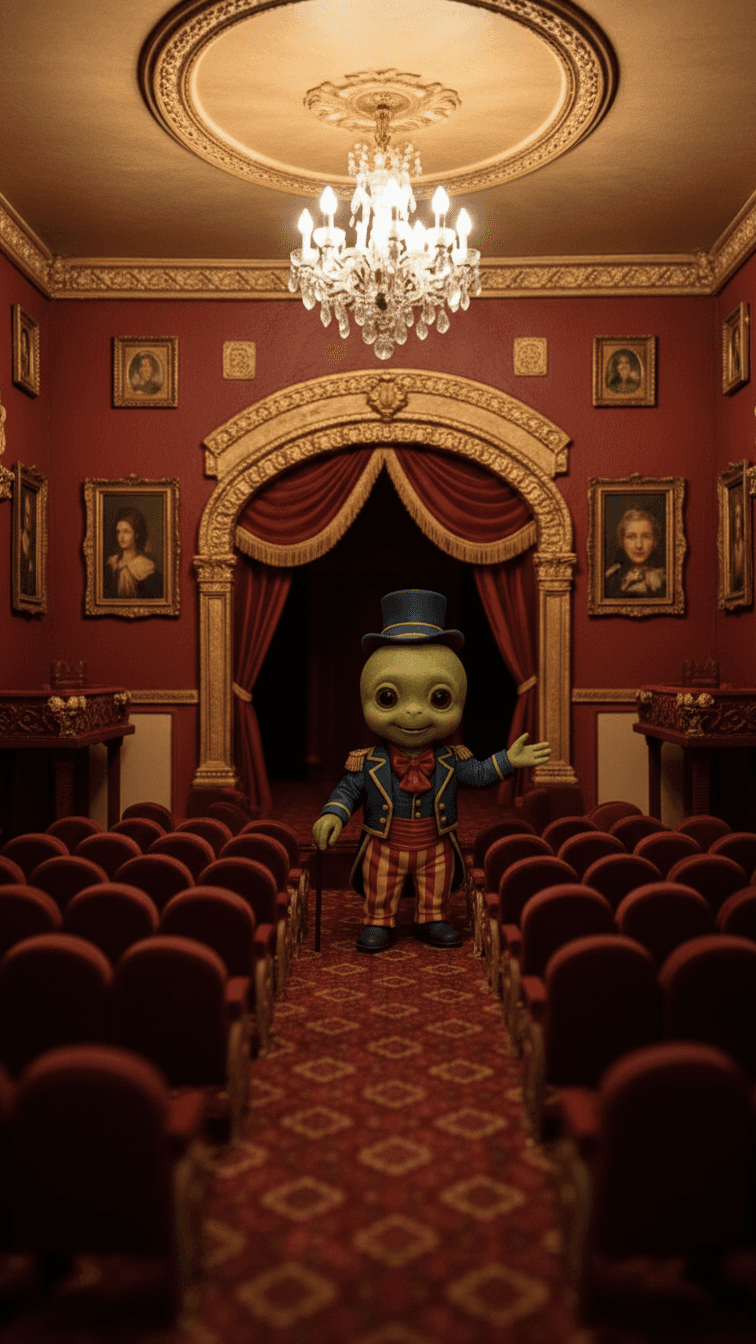
Chamber
Chamber
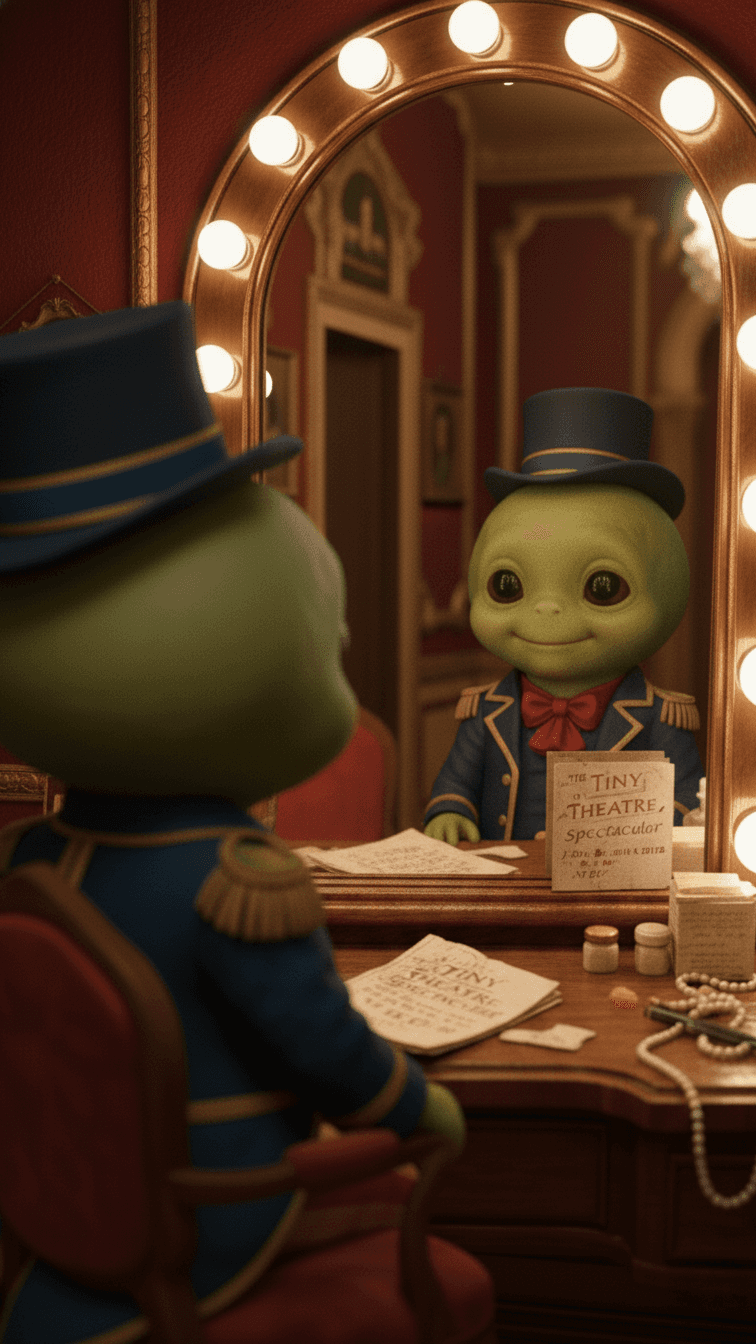
Dressing Room
Dressing Room
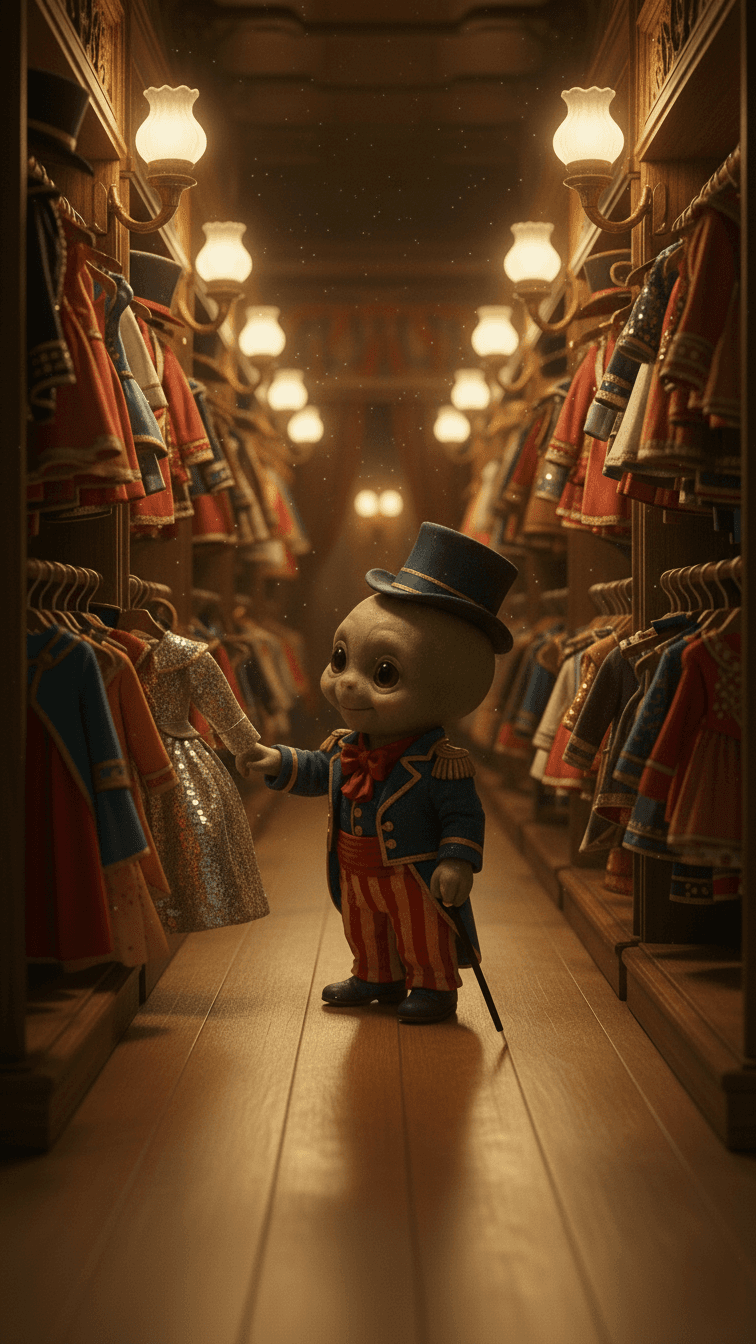
Hall of Costumes
Hall of Costumes
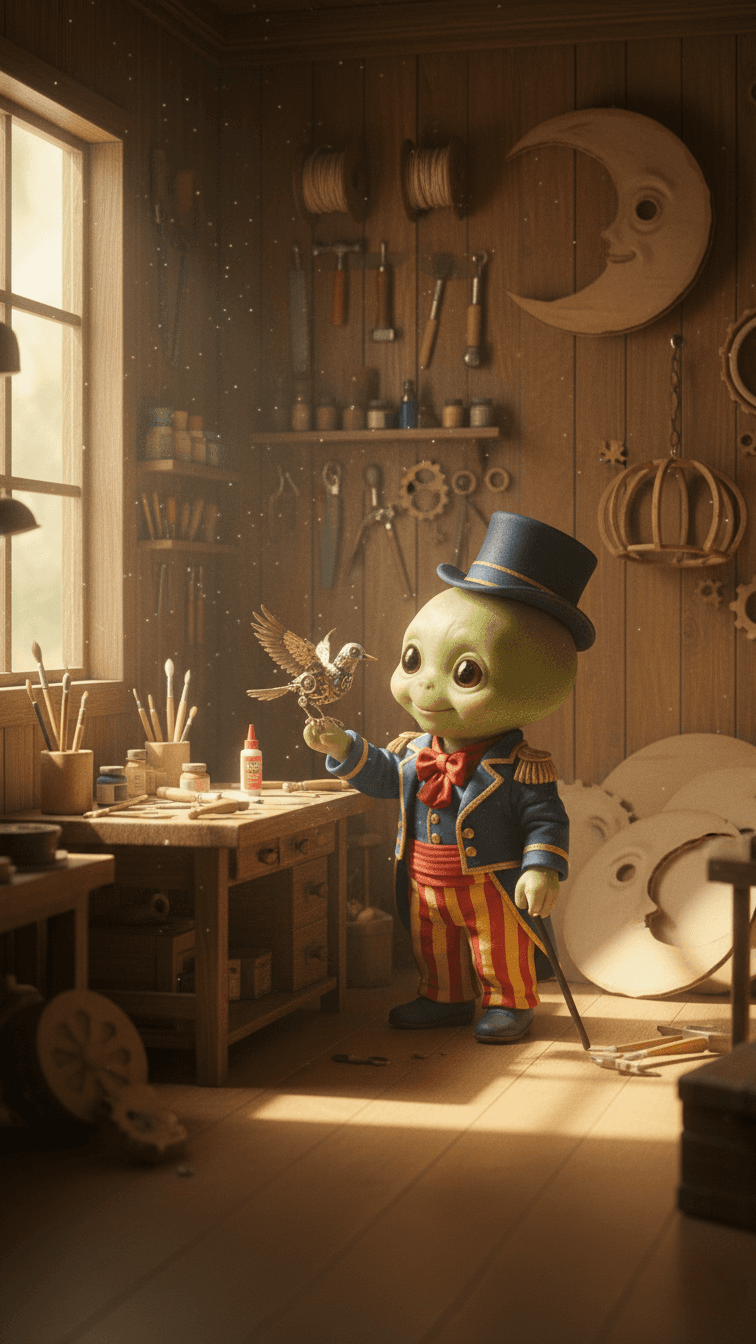
Prop Workshop
Prop Workshop
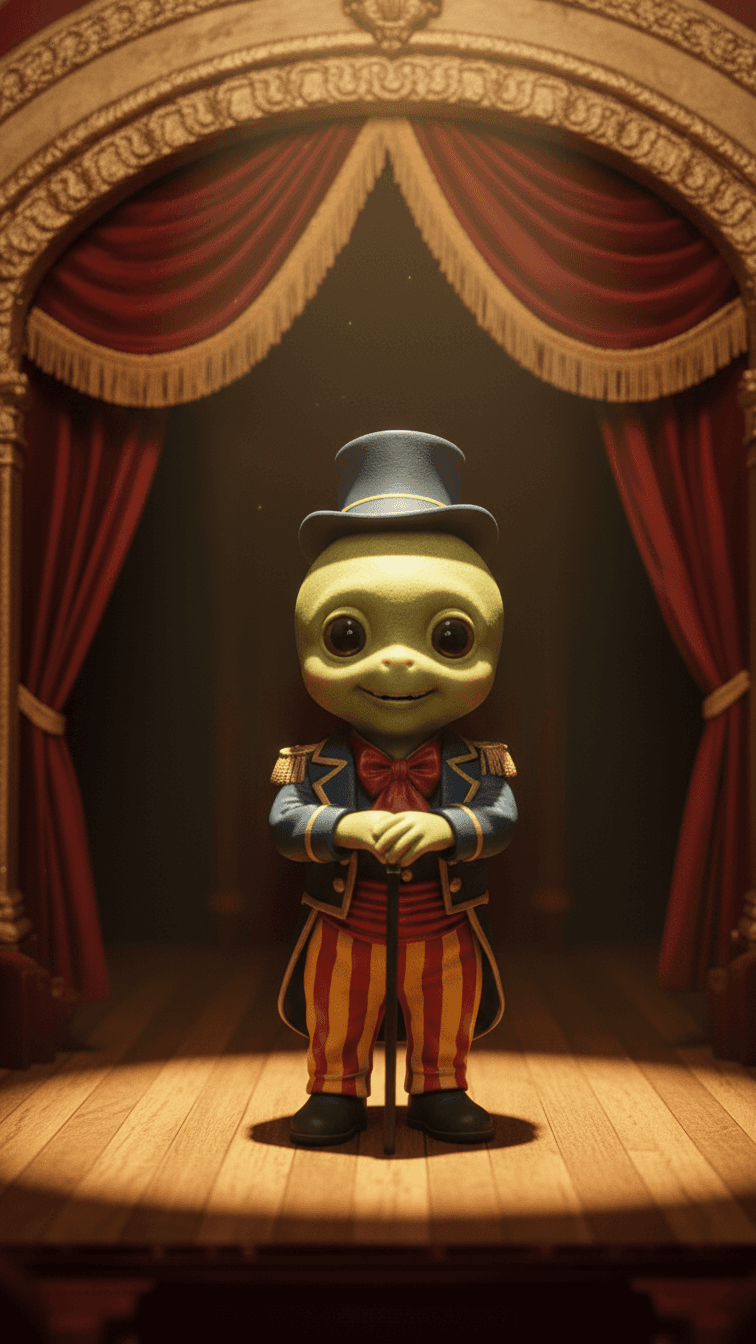
Stage Performance
Stage Performance
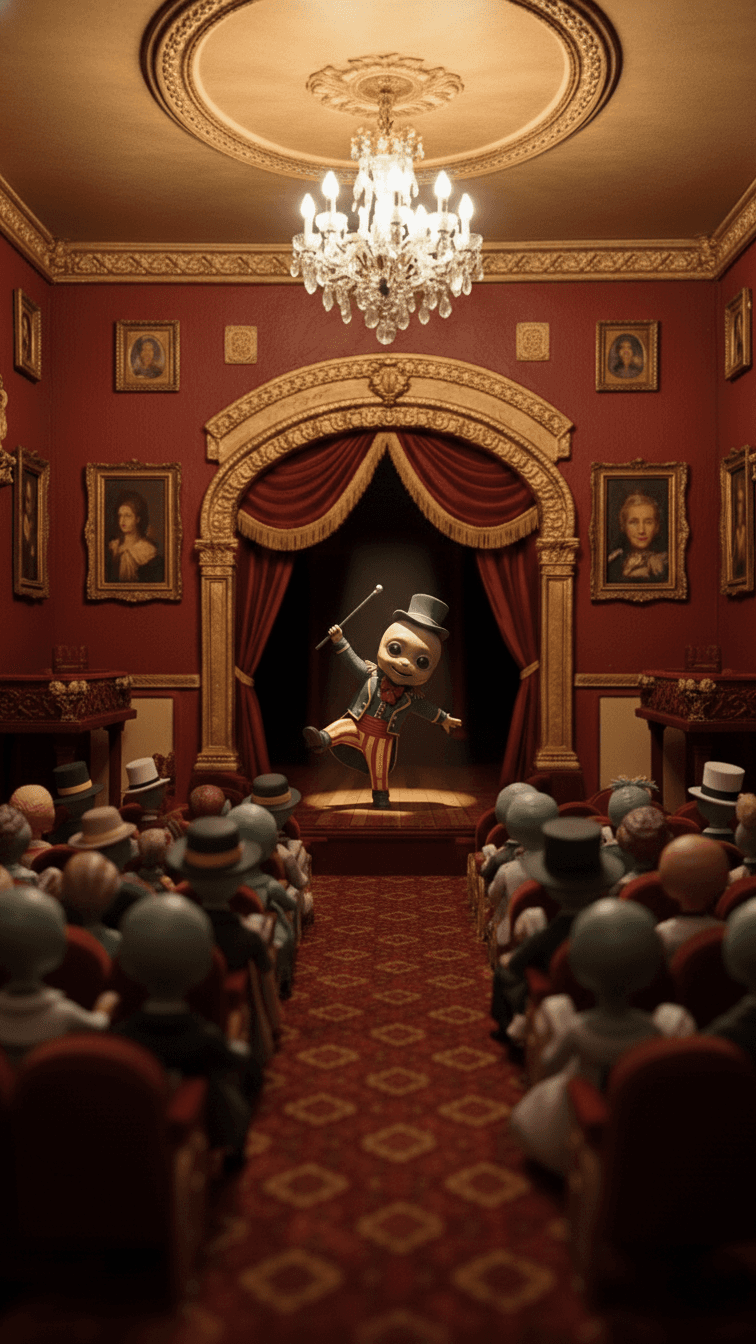
Closing
Closing
Voice Generation
Voice Generation
Voice Generation
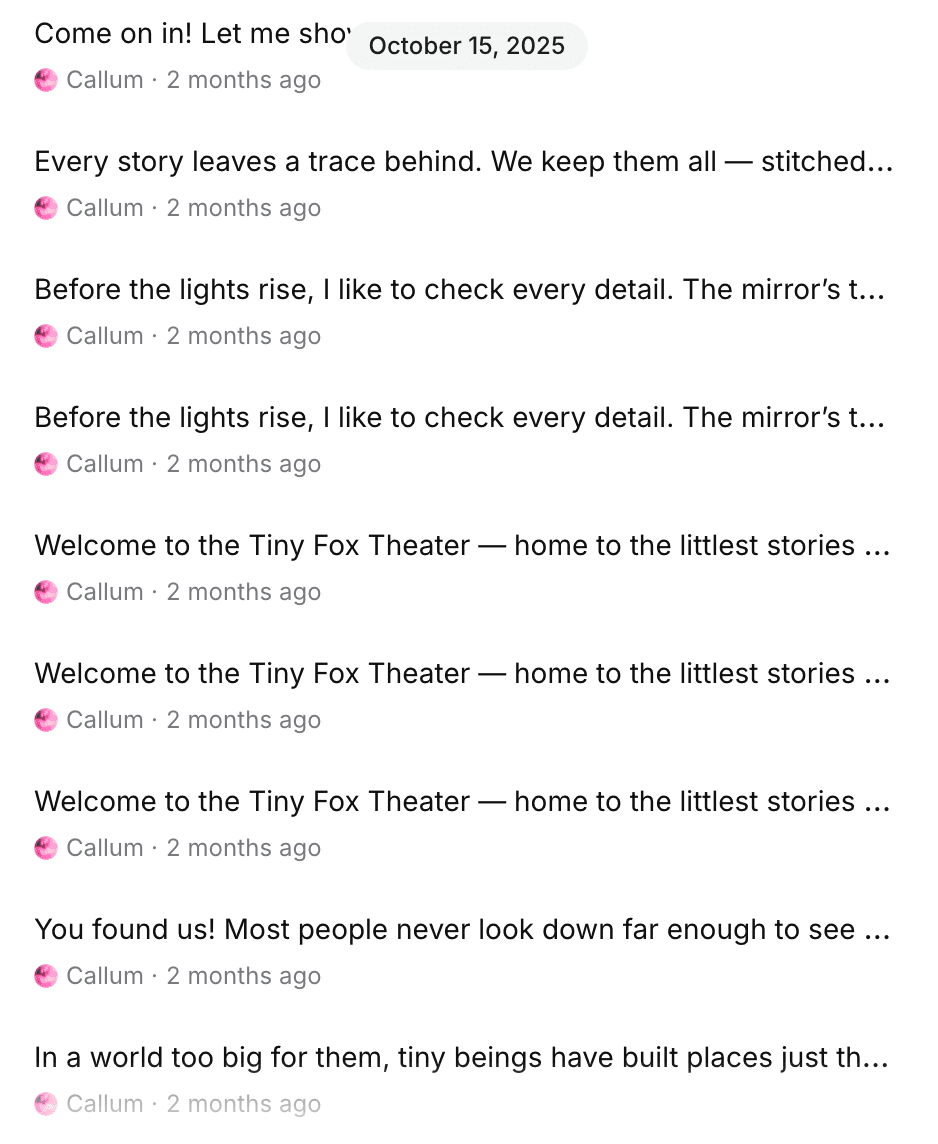
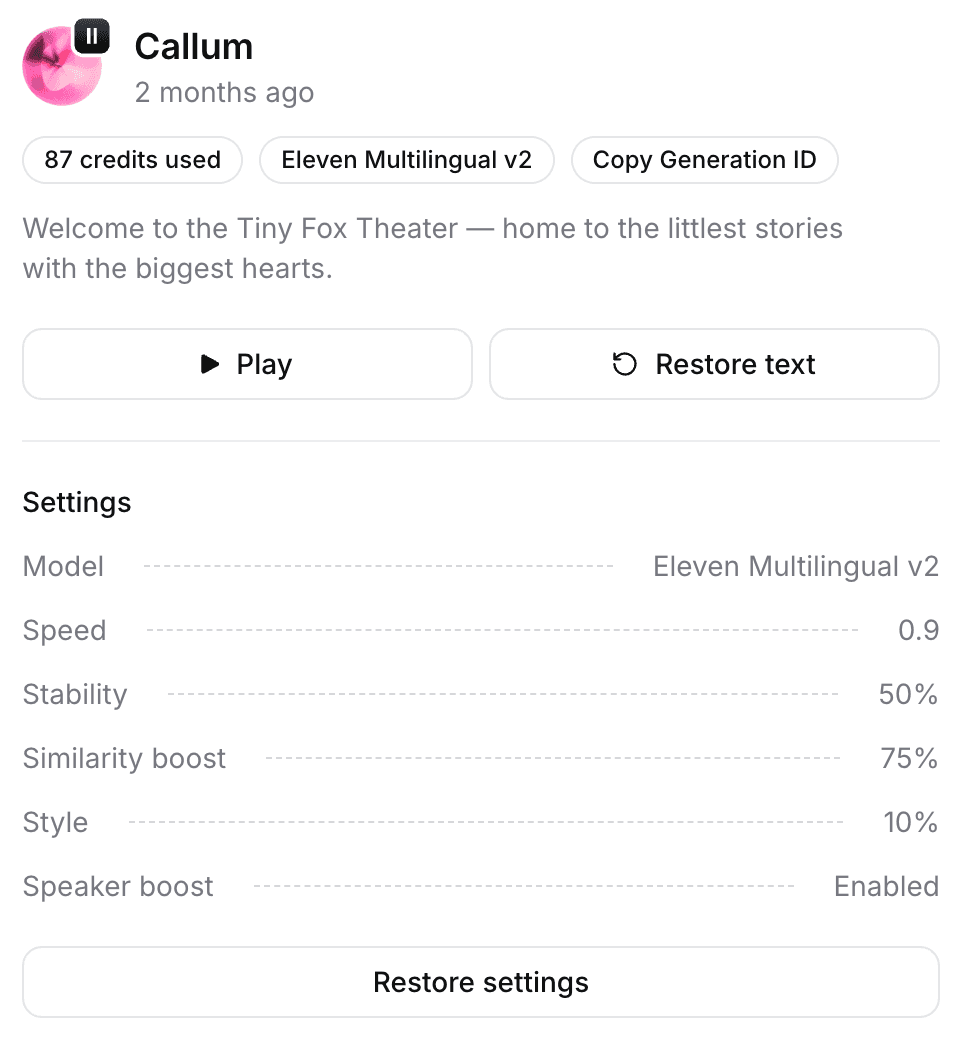
To bring the character to life beyond images and video, voice generation was used as part of the experiment. Dialogue and narration were created with the platform 11ElevenLabs, allowing the alien ringmaster to speak directly to the viewer.
Short lines of scripted narration were generated to match key moments in the storyboard. These voices helped shape the personality and emotional tone of the character, adding warmth and theatrical presence to the miniature world.
This step explored how sound, image, and motion could work together to form a more complete cinematic experience.
To bring the character to life beyond images and video, voice generation was used as part of the experiment. Dialogue and narration were created with the platform 11ElevenLabs, allowing the alien ringmaster to speak directly to the viewer.
Short lines of scripted narration were generated to match key moments in the storyboard. These voices helped shape the personality and emotional tone of the character, adding warmth and theatrical presence to the miniature world.
This step explored how sound, image, and motion could work together to form a more complete cinematic experience.
To bring the character to life beyond images and video, voice generation was used as part of the experiment. Dialogue and narration were created with the platform 11ElevenLabs, allowing the alien ringmaster to speak directly to the viewer.
Short lines of scripted narration were generated to match key moments in the storyboard. These voices helped shape the personality and emotional tone of the character, adding warmth and theatrical presence to the miniature world.
This step explored how sound, image, and motion could work together to form a more complete cinematic experience.
Visual Process
Visual Process
Visual Process
All visuals for this project were created as exploratory prototypes using generative tools, including both image and video generation. The goal was not final production quality, but rapid visual experimentation and storytelling development.
For images, the process began with detailed written prompts describing the tiny door, the interior theater, and the alien character. Each prompt produced multiple variations. Promising results were selected and refined, gradually shaping the look of the miniature world, from the glowing chamber to the dressing room, costume hall, and prop workshop.
For video, prompts were written to imagine how the story might unfold cinematically. Shots were designed to simulate camera movement, such as slow zooms toward the door, the doors opening, the alien greeting the viewer, and the final performance on stage. These sequences helped test pacing, atmosphere, and narrative flow.
By combining image and video experiments, separate visuals slowly formed into a coherent narrative experience centered on the Fox Theater location.
Tools Used: ChatGPT (prompt refining), Nano Banana (image generation), Hailuo (video generation), Sora (video generation), Photoshop (image editing), CapCut (video editing).
All visuals for this project were created as exploratory prototypes using generative tools, including both image and video generation. The goal was not final production quality, but rapid visual experimentation and storytelling development.
For images, the process began with detailed written prompts describing the tiny door, the interior theater, and the alien character. Each prompt produced multiple variations. Promising results were selected and refined, gradually shaping the look of the miniature world, from the glowing chamber to the dressing room, costume hall, and prop workshop.
For video, prompts were written to imagine how the story might unfold cinematically. Shots were designed to simulate camera movement, such as slow zooms toward the door, the doors opening, the alien greeting the viewer, and the final performance on stage. These sequences helped test pacing, atmosphere, and narrative flow.
By combining image and video experiments, separate visuals slowly formed into a coherent narrative experience centered on the Fox Theater location.
Tools Used: ChatGPT (prompt refining), Nano Banana (image generation), Hailuo (video generation), Sora (video generation), Photoshop (image editing), CapCut (video editing).
All visuals for this project were created as exploratory prototypes using generative tools, including both image and video generation. The goal was not final production quality, but rapid visual experimentation and storytelling development.
For images, the process began with detailed written prompts describing the tiny door, the interior theater, and the alien character. Each prompt produced multiple variations. Promising results were selected and refined, gradually shaping the look of the miniature world, from the glowing chamber to the dressing room, costume hall, and prop workshop.
For video, prompts were written to imagine how the story might unfold cinematically. Shots were designed to simulate camera movement, such as slow zooms toward the door, the doors opening, the alien greeting the viewer, and the final performance on stage. These sequences helped test pacing, atmosphere, and narrative flow.
By combining image and video experiments, separate visuals slowly formed into a coherent narrative experience centered on the Fox Theater location.
Tools Used: ChatGPT (prompt refining), Nano Banana (image generation), Hailuo (video generation), Sora (video generation), Photoshop (image editing), CapCut (video editing).
Reflection
Reflection
Reflection
Working on this experiment strengthened my approach to storytelling based in real places. It encouraged thinking about mood, pacing, and character rather than focusing only on individual images. The process also showed how new creative tools can act as partners for exploration instead of simple shortcuts.
In the future, the idea could expand beyond this single location. Similar stories could be imagined for other Tiny Doors across Atlanta. The project could evolve into a fully edited short film with sound design, or grow into an interactive experience that allows viewers to explore these hidden worlds themselves.
Working on this experiment strengthened my approach to storytelling based in real places. It encouraged thinking about mood, pacing, and character rather than focusing only on individual images. The process also showed how new creative tools can act as partners for exploration instead of simple shortcuts.
In the future, the idea could expand beyond this single location. Similar stories could be imagined for other Tiny Doors across Atlanta. The project could evolve into a fully edited short film with sound design, or grow into an interactive experience that allows viewers to explore these hidden worlds themselves.
Working on this experiment strengthened my approach to storytelling based in real places. It encouraged thinking about mood, pacing, and character rather than focusing only on individual images. The process also showed how new creative tools can act as partners for exploration instead of simple shortcuts.
In the future, the idea could expand beyond this single location. Similar stories could be imagined for other Tiny Doors across Atlanta. The project could evolve into a fully edited short film with sound design, or grow into an interactive experience that allows viewers to explore these hidden worlds themselves.
MORE WORKS
MORE WORKS