
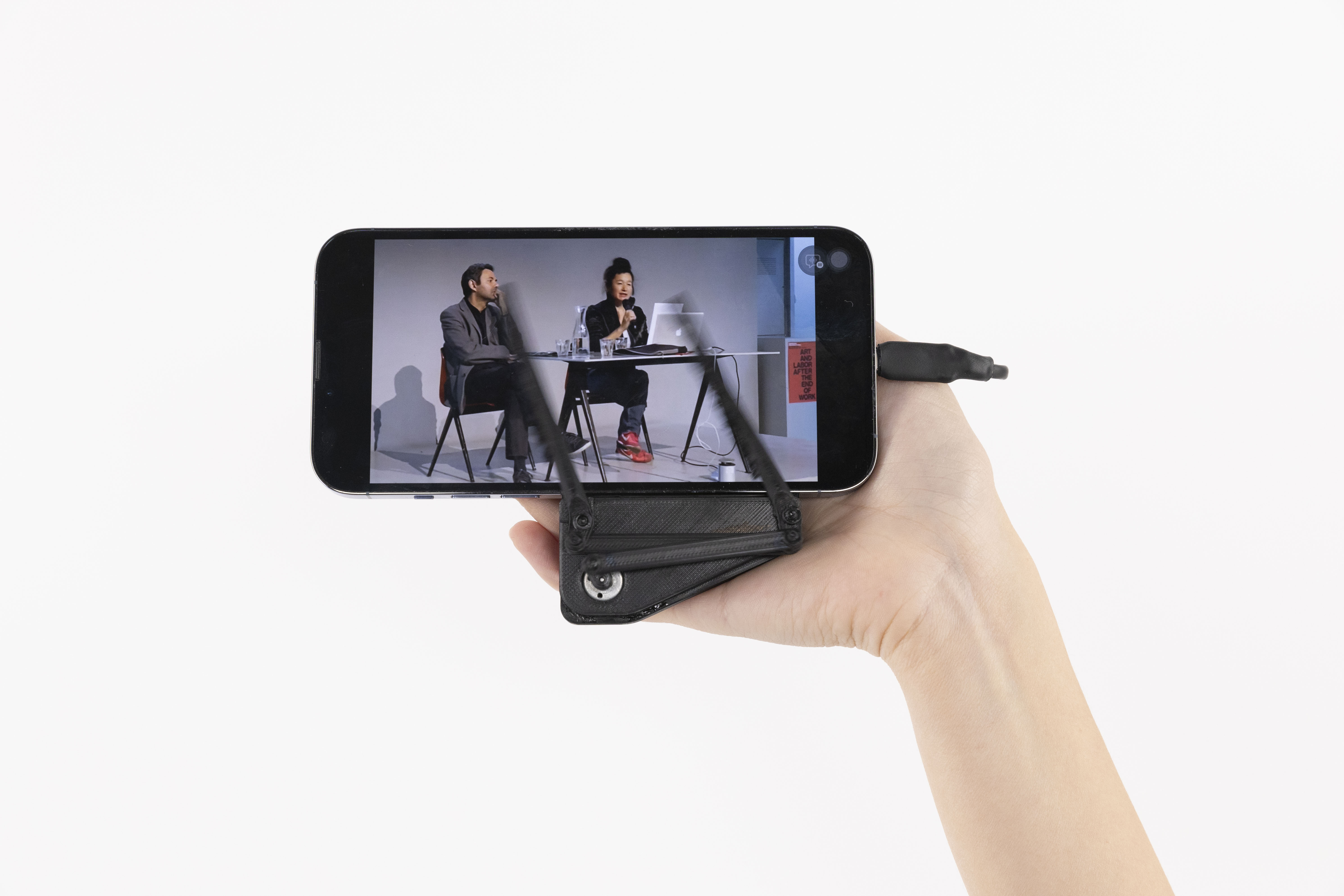
Screen Wiper
A compact phone accessory inspired by windshield wipers, designed to clear water from a screen.
Role:
Product Design, Mechanism Development, 3D Modeling & Prototyping
Type:
Product Prototype, Mechanical Design
Tools:
Fusion 360, MotionGen, Laser Cutting, 3D Printing
Year:
2024
Screen Wiper
A compact phone accessory inspired by windshield wipers, designed to clear water from a screen.
Role:
Product Design, Mechanism Development, 3D Modeling & Prototyping
Type:
Product Prototype, Mechanical Design
Tools:
Fusion 360, MotionGen, Laser Cutting, 3D Printing
Year:
2024
Screen Wiper
A compact phone accessory inspired by windshield wipers, designed to clear water from a screen.
Role:
Product Design, Mechanism Development, 3D Modeling & Prototyping
Type:
Product Prototype, Mechanical Design
Tools:
Fusion 360, MotionGen, Laser Cutting, 3D Printing
Year:
2024
Overview
Overview
Overview
Screen Wiper is an experimental phone accessory inspired by the familiar mechanism of car windshield wipers.
The idea came from a simple everyday frustration: when a phone screen gets wet, water droplets can obscure the display and interfere with touch interactions. We imagined a miniature wiper that could attach to a phone and sweep water away from its screen.
Through mechanical simulations, physical testing, and several design iterations, we explored how a conventional wiper mechanism could be adapted into a compact, portable object.
Exploring the Mechanism
Exploring the Mechanism
Exploring the Mechanism
We began by experimenting with a symmetrical linkage driven by a motor at its center. After testing the dimensions with laser-cut acrylic components, we found that the resulting motion did not closely resemble the sweeping action of real windshield wipers.
We began by experimenting with a symmetrical linkage driven by a motor at its center. After testing the dimensions with laser-cut acrylic components, we found that the resulting motion did not closely resemble the sweeping action of real windshield wipers.
We began by experimenting with a symmetrical linkage driven by a motor at its center. After testing the dimensions with laser-cut acrylic components, we found that the resulting motion did not closely resemble the sweeping action of real windshield wipers.

For the second approach, we studied the mechanics of car wipers and used MotionGen to simulate a new linkage system. This design allowed the two wiper arms to move through similar angles in a coordinated sweeping motion, providing a stronger foundation for the physical prototype.
For the second approach, we studied the mechanics of car wipers and used MotionGen to simulate a new linkage system. This design allowed the two wiper arms to move through similar angles in a coordinated sweeping motion, providing a stronger foundation for the physical prototype.
For the second approach, we studied the mechanics of car wipers and used MotionGen to simulate a new linkage system. This design allowed the two wiper arms to move through similar angles in a coordinated sweeping motion, providing a stronger foundation for the physical prototype.


Prototyping & Refinement
Prototyping & Refinement
Prototyping & Refinement
Using Fusion 360, we translated the mechanism into a series of compact components, refining the design through three iterations.
The first version established the basic dimensions and assembly. We repurposed a miniature motor and circuit board from a portable phone fan, then tested the motor using a variable DC power supply to simulate the phone's output voltage.


For the second version, we reduced the size of the base and adjusted the shape of the wiper arms. However, the thicker arms added too much weight for the small motor, revealing a tradeoff between appearance and mechanical performance.
For the second version, we reduced the size of the base and adjusted the shape of the wiper arms. However, the thicker arms added too much weight for the small motor, revealing a tradeoff between appearance and mechanical performance.
For the second version, we reduced the size of the base and adjusted the shape of the wiper arms. However, the thicker arms added too much weight for the small motor, revealing a tradeoff between appearance and mechanical performance.


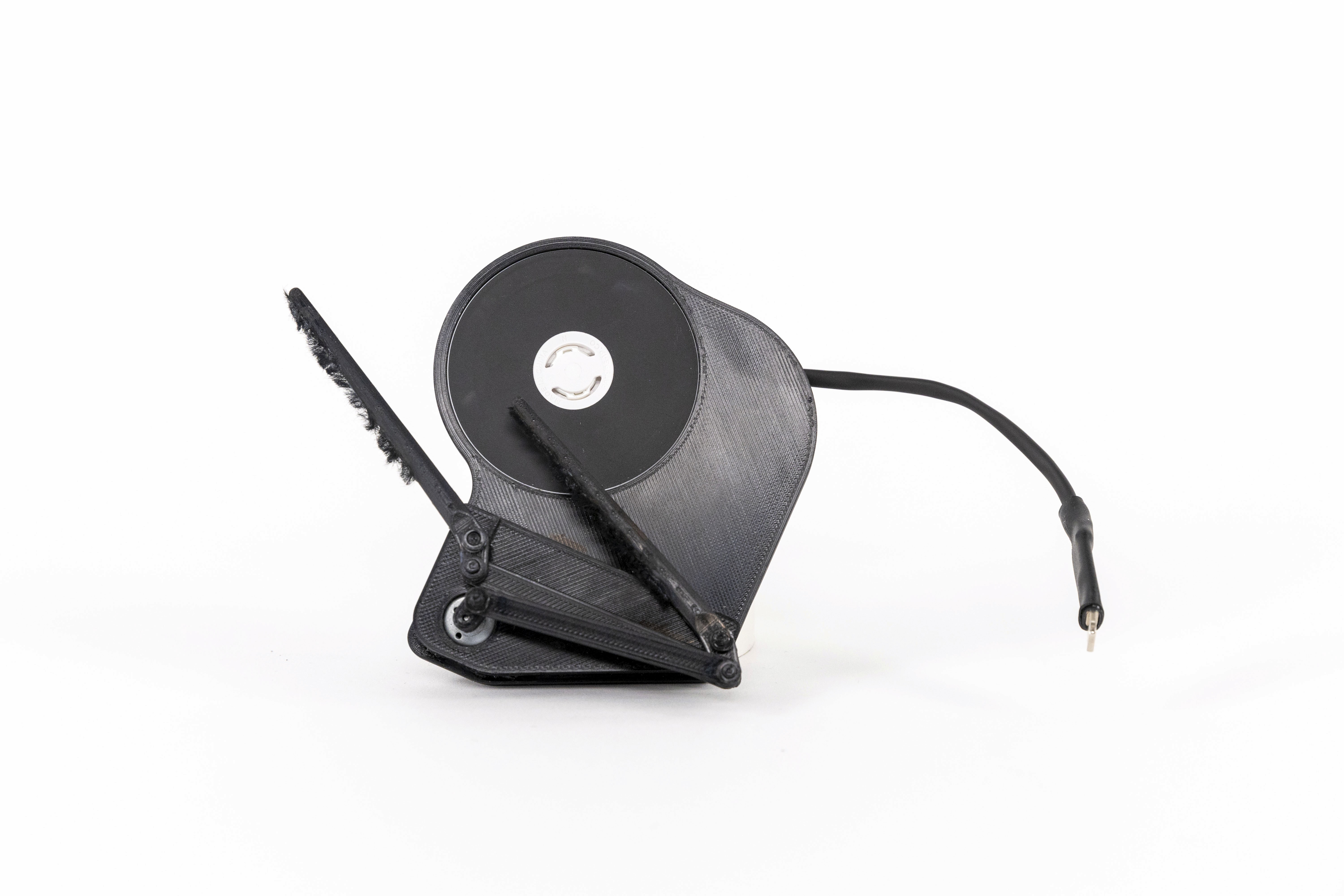
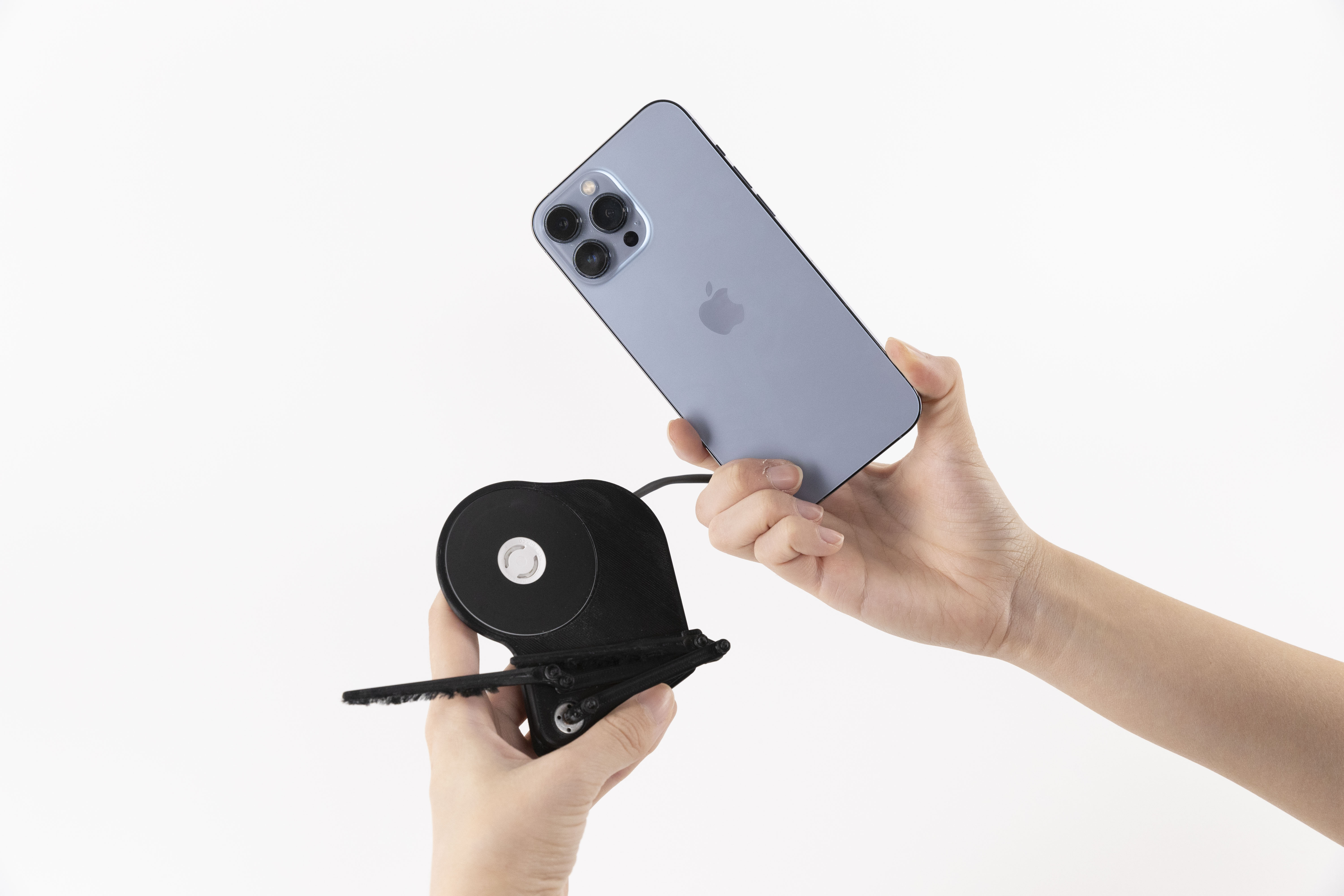
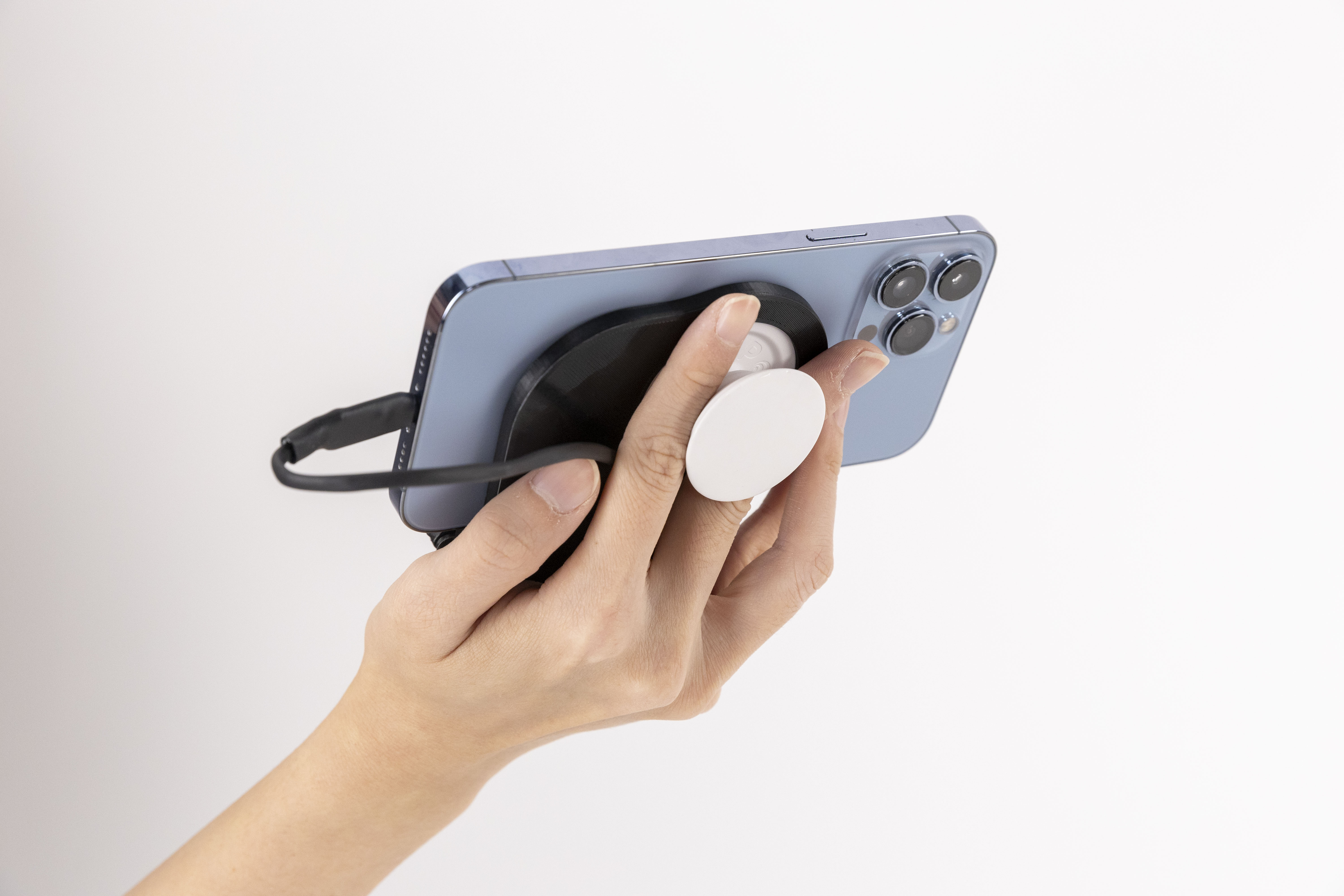
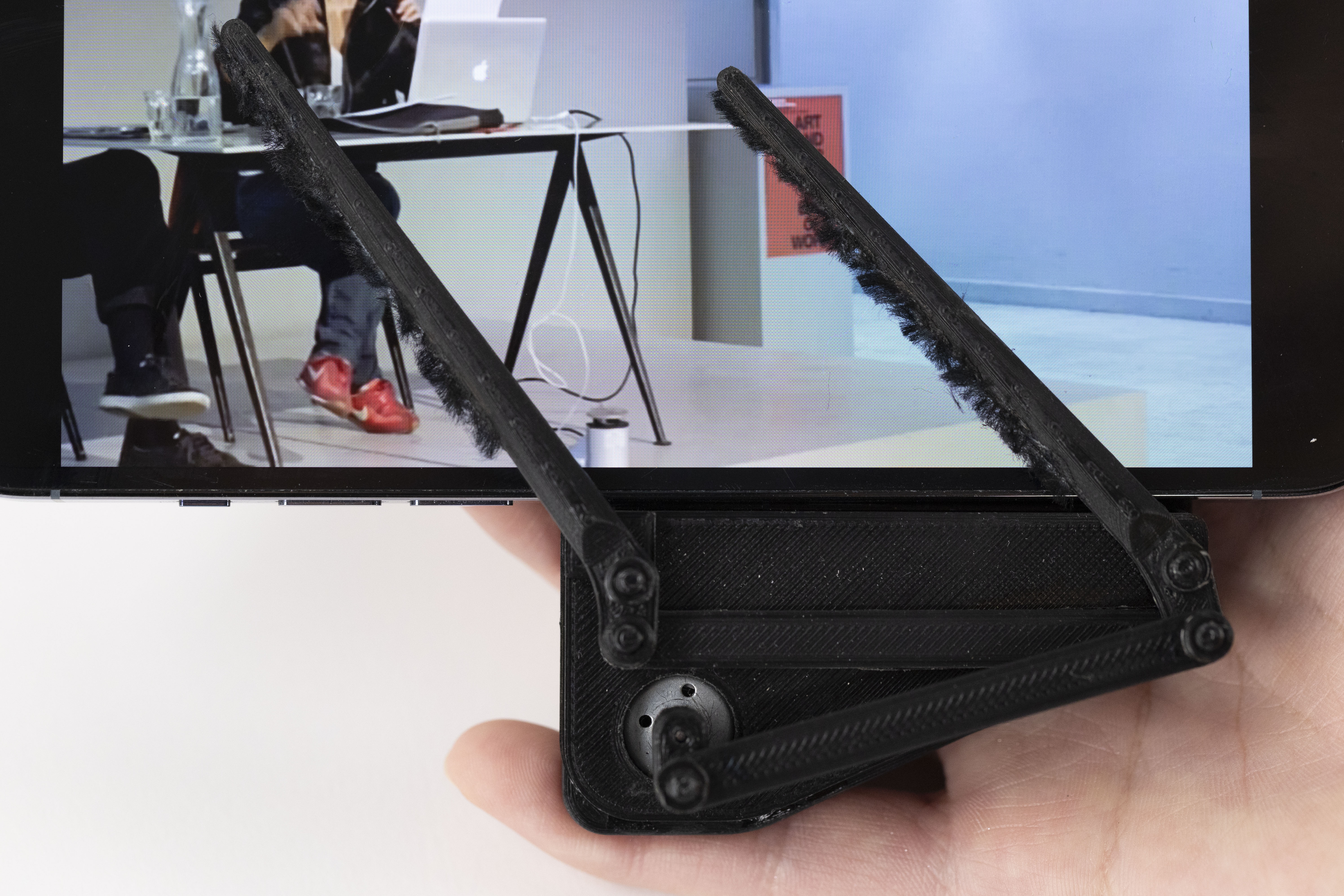
In the third iteration, we simplified the structure by removing unnecessary components and reducing the weight of the moving parts. We also developed a mounting solution using a MagSafe-style phone grip and added soft fibers to the wiper arms to mimic the brushing action of windshield wipers.
In the third iteration, we simplified the structure by removing unnecessary components and reducing the weight of the moving parts. We also developed a mounting solution using a MagSafe-style phone grip and added soft fibers to the wiper arms to mimic the brushing action of windshield wipers.
In the third iteration, we simplified the structure by removing unnecessary components and reducing the weight of the moving parts. We also developed a mounting solution using a MagSafe-style phone grip and added soft fibers to the wiper arms to mimic the brushing action of windshield wipers.


Final Prototype
Final Prototype
Final Prototype
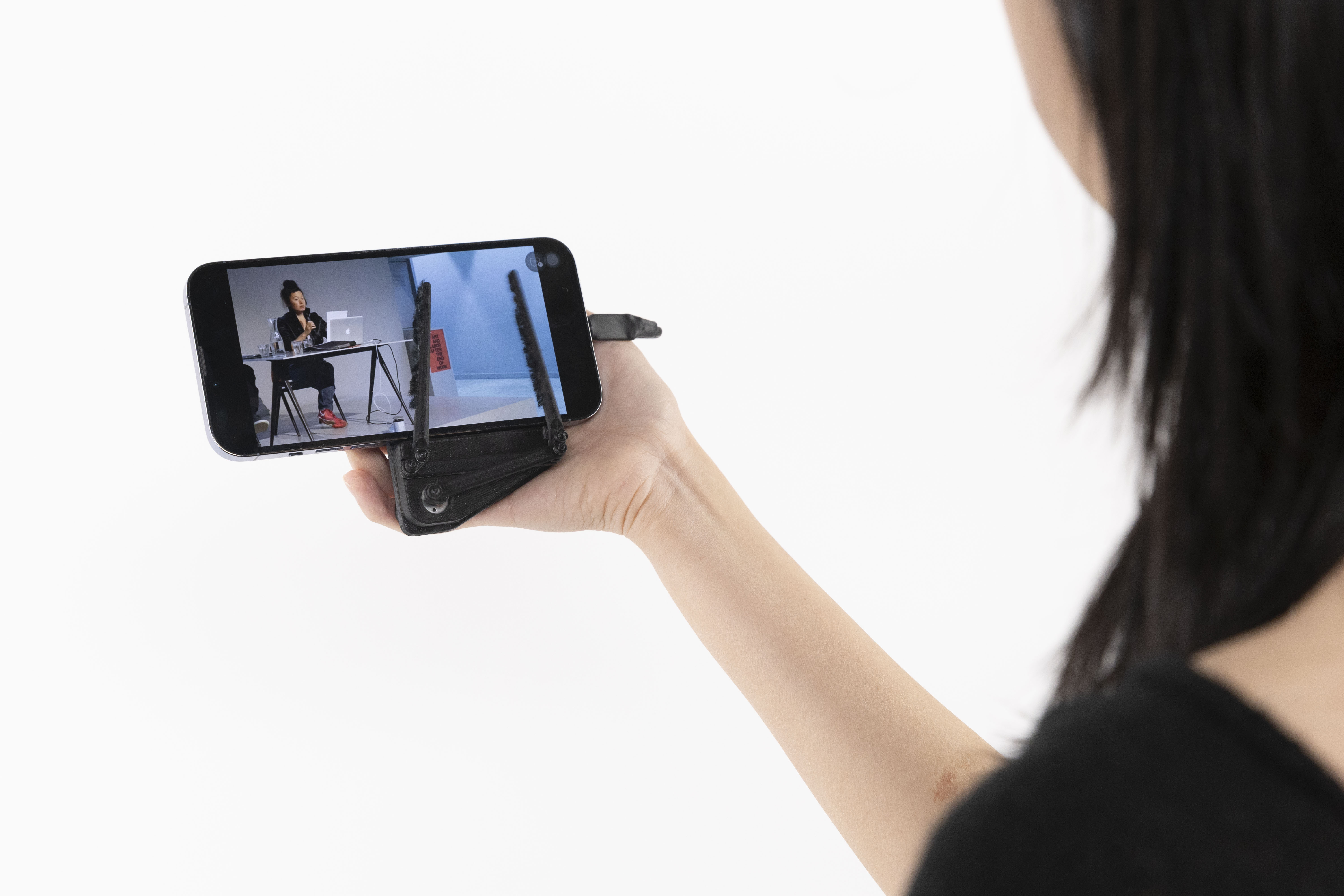
The final prototype combines a compact mechanical linkage, a miniature motor, and a phone grip into a portable screen-wiping accessory.
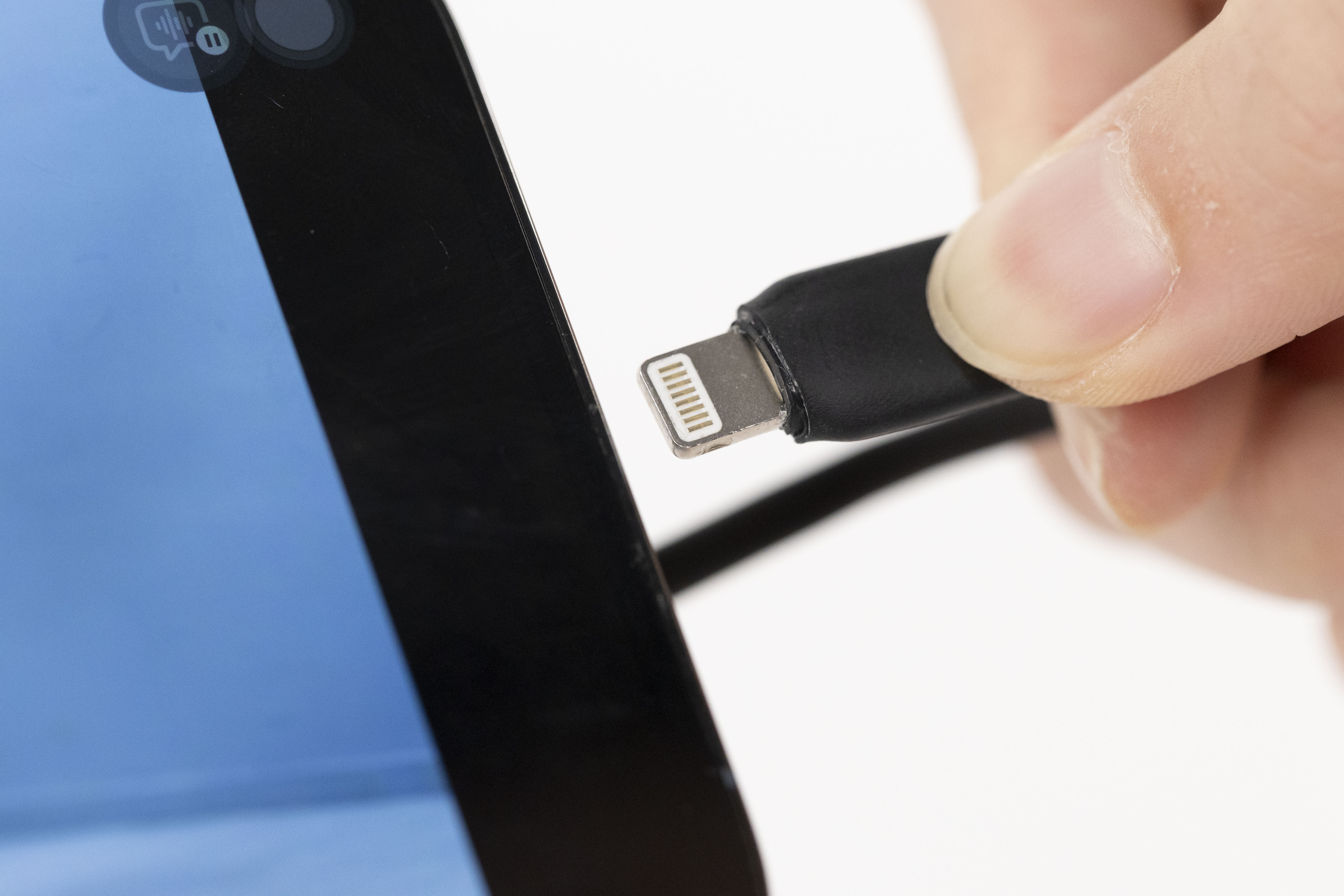
While the design demonstrates the proposed mechanism and attachment method, some details, particularly the exposed wiring, would need further refinement for a more integrated and practical product.
MORE WORKS
MORE WORKS